




Ask the AI Tutor
Need help with Plants - Wildflowers 2? Ask our AI Tutor!
AI Tutor - Lucy
Connecting with Tutor...
Please wait while we establish connection
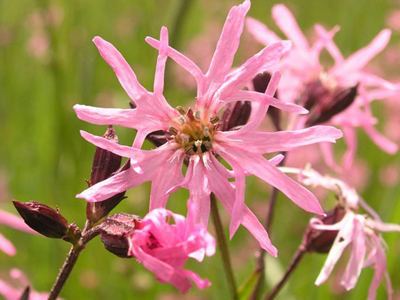
The stems on this wildflower have downward-pointing barbed hairs which make the plant rough to the touch.
Plants - Wildflowers 2
Wildflowers are easy to miss until you know what to look for. This quiz helps you spot common species, recognise key features, and link them to habitats.
To see a larger image, click on the picture.
1 .
Can you name this wildflower?

Photograph courtesy of TeunSpaans
Water Forget-me-not
Ox-eye Daisy
Mouse-ear Hawkweed
Greaty Hairy Willow-herb
- Order: Asterales
- Family: Asteraceae
- Genus: Pilosella
- Species: P. officinarum
- Grows in dry sandy soils, dry limestone pastures and heathland.
- Often grows as a pioneer in sandy or chalky areas, where other plants cannot exist.
- One of the most common species of its kind.
2 .
Can you name this wildflower?

Photograph courtesy of India Photoblog
Wild Mustard
Ox-eye Daisy
Dwarf Mallow
Bladder Campion
- Order: Brassicales
- Family: Brassicaceae
- Also known as Charlock
- A widespread, persistent, annual field weed.
- The seeds retail their viability for years.
- Seeds also provide lubricating oil.
- This nectar producing plant is often frequented by bees.
3 .
Can you name this wildflower?

Photograph courtesy of Karelj
Lady's Smock
Wild Mustard
Coltsfoot
Heather
- Order: Brassicales
- Family: Brassicaceae
- Genus: Cardamine
- Species: C. pratensis
- This plant is also knows as the Cuckoo Flower
- Balls of froth can be seen on the stems; these are formed by larvae of the meadow froghopper.
- Flowers are rich in nectar and the content of vitamin C in the leaves is five times higher than in lemons!
4 .
Can you name this wildflower?

Photograph courtesy of http://www.naturkamera.de/
St John's wort
Sheep's Sorrel
Birdsfoot-trefoil
Spurge
- Order: Malpighiales
- Family: Hypericaceae
- Genus: Hypericum
- Species: H. perforatum
- The flowers are yellow but, when rubbed, the crushed cells release colouring matter which turns red in the air.
- In the past, stories about its bewitching powers were rife because when a cow had eaten a large quantity, its milk turned pinkish!
5 .
Can you name this wildflower?

Photograph courtesy of Baryonic Being
Yarrow
Cowslip
Toadflax
Harebell
- Order: Ericales
- Family: Primulaceae
- Genus: Primula
- Species: P. veris
- Commonly found in pastures and on grassy slopes.
- Also knowns as Paigle, Herb Peter and Fairy Cups.
- Produces two types of flowers on separate plants.
- Its leaves are used as a salad green in Spanish cuisine.
6 .
Can you name this wildflower?

Photograph courtesy of Guido Gerding
Scarlet Pimpernel
Shepherd's Purse
Dwarf Mallow
Ragged Robin
- Order: Caryophyllales
- Family: Caryophyllaceae
- Genus: Lychnis
- Species: L. flos-cuculi
- Inhabits mainly damp woods, meadows and marshy ground.
- The nectar producing flowers can be pollinated by insects with a short proboscis.
- The stems have downward-pointing barbed hairs which make the plant rough to the touch.
7 .
Can you name this wildflower?

Photograph courtesy of Alvesgaspar
Meadow Vetchling
Ragged Robin
Toadflax
Field Bindweed
- Order: Solanales
- Family: Convolvulaceae
- Genus: Convolvulus
- Species: C. arvensis
- A very invasive and troublesome weed, with the most delightful flowers.
- Grows in abundance on wasteland, banks, roadsides and in ditches.
- Does not need fertile soil and can withstand drought.
8 .
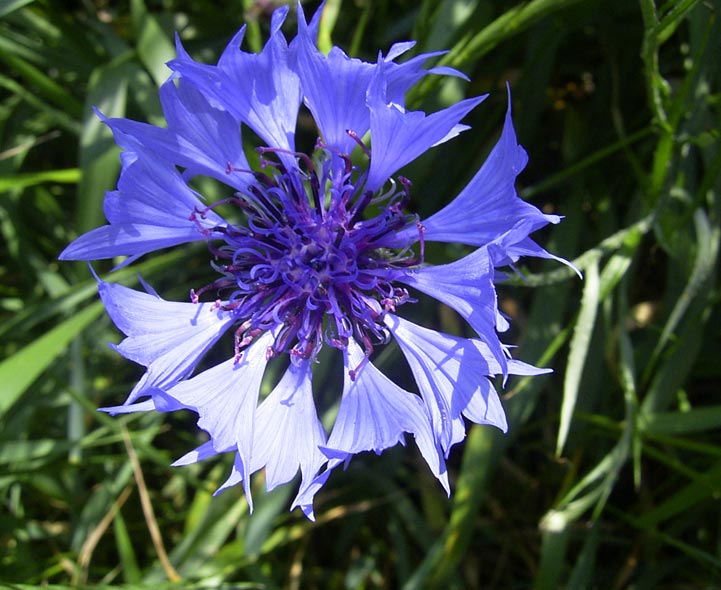
Can you name this wildflower?
Photograph courtesy of TeunSpaans
Cornflower
Kingcup
Germander Speedwell
Sweep's Brush
- Order: Asterales
- Family: Asteraceae
- Genus: Centaurea
- Species: C. cyanus
- Became widespread in pre-historic Europe.
- Flowers contain a beautiful blue dye based upon the pigment cyanin.
- Cyanin is soluble in water and is used to colour perfumes, wool, aromatic spices and even Champagne wines!
9 .
Can you name this wildflower?

Photograph courtesy of TeunSpaans
Aaron's Rod
Yarrow
Bladder Campion
Ground Elder
- Order: Caryophyllales
- Family: Caryophyllaceae
- Genus: Silene
- Species: S. vulgaris
- The most striking feature of this plant is its inflated calyx.
- The depth of the calyx means only nocturnal moths with a long proboscis are able to reach the nectar.
- Grows on dry slopes, roadsides, quarries and banks.
10 .
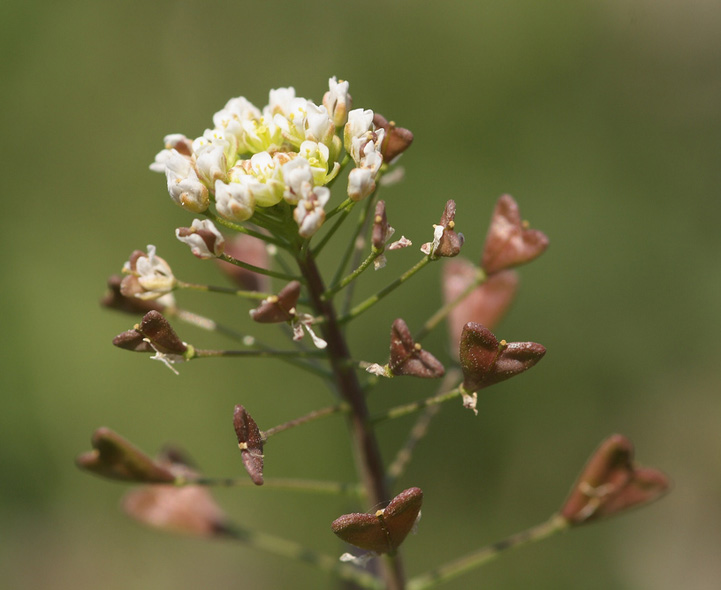
Can you name this wildflower?
Photograph courtesy of Deanster1983
Cowslip
Shepherd's Purse
Harebell
Wood Anemone
- Order: Brassicales
- Family: Brassicaceae
- Genus: Capsella
- Species: C. bursa-pastoris
- Very hardy and is capable of flowering in the depths of winter.
- Has long been used in folk medicine to stop internal bleeding as it contains a substance which causes contraction of blood vessels.



**Unlimited Quizzes Await You! 🚀**
Hey there, quiz champ! 🌟 You've already tackled today's free questions.
Ready for more?
Ready for more?
🔓 Unlock UNLIMITED Quizzes and challenge yourself every day. But that's
not all...
not all...
🔥 As a Subscriber you can join our thrilling "Daily Streak" against other
quizzers. Try to win a coveted spot on our Hall of Fame Page.
quizzers. Try to win a coveted spot on our Hall of Fame Page.
Don't miss out! Join us now and keep the fun rolling. 🎉
**Unlimited Quizzes Await You! 🚀**
Hey there, quiz champ! 🌟 You've already tackled today's free questions. Ready for more?
🔓 Unlock UNLIMITED Quizzes and challenge yourself every day. But that's not all...
🔥 As a Subscriber you can join our thrilling "Daily Streak" against other quizzers. Try to win a coveted spot on our Hall of Fame Page.
Don't miss out! Join us now and keep the fun rolling. 🎉




© Copyright 2016-2026 - Education Quizzes
Work Innovate Ltd - Design | Development |
Marketing
