




Ask the AI Tutor
Need help with Weeds - Lawn Weeds? Ask our AI Tutor!
AI Tutor - Lucy
Connecting with Tutor...
Please wait while we establish connection

A weed-free garden would take 24-hour attention!
Weeds - Lawn Weeds
Lawn weeds can turn a smooth green patch into a bumpy mix of leaves and flowers. Learn why they appear, how they spread, and simple ways to keep grass healthy.
To see a larger image, click on the picture.
1 .
Can you identify this weed that is frequently found in lawns?

Photograph courtesy of www.geograph.org.uk/profile/139
Dandelion
Daisy
Creeping buttercup
Scarlet pimpernel
- Latin Name: Bellis Perennis
- Grows very close to the ground and although its flower heads are often taken off by the mower there are always others that open within a day or two!
- Each white petal is an individual flower as are each of the central yellow parts.
- Flowers that work together in this way to attract insects are known as composite flowers.
2 .
Can you identify this weed that is frequently found in lawns?

Photograph courtesy of Matt Lavin
Yarrow
Plantain
Dandelion
Clover
- Latin Name: Trifolium repens.
- The Latin deciphered means three (Tri) leaves (folium).
- Finding a plant with four leaves is supposed to bring good luck.
- In legend, the first leaf represents faith, the second is hope, the third is love and the fourth is luck.
- There are both red flowered and white flowered forms of the plant.
3 .
Can you identify this weed that is frequently found in lawns?
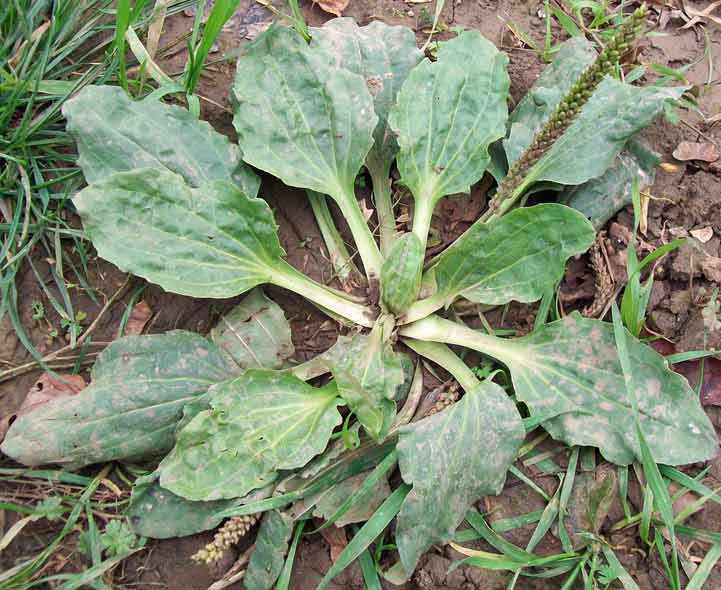
Photograph courtesy of AnemoneProjectors
Wild Sorrel
Plantain
Scarlet pimpernel
Creeping thistle
- Latin Name: Plantago major.
- Forms a low growing rosette of leaves up to 30 cm in diameter.
- Long greenish-brown flower spikes can be produced but they are seldom seen in lawns because they are cut off by the mower.
- Grows happily in the compacted areas that can be found in many lawns.
- Sometimes known as 'soldiers herb' because of its use as a field dressing.
4 .
Can you identify this weed that is frequently found in lawns?
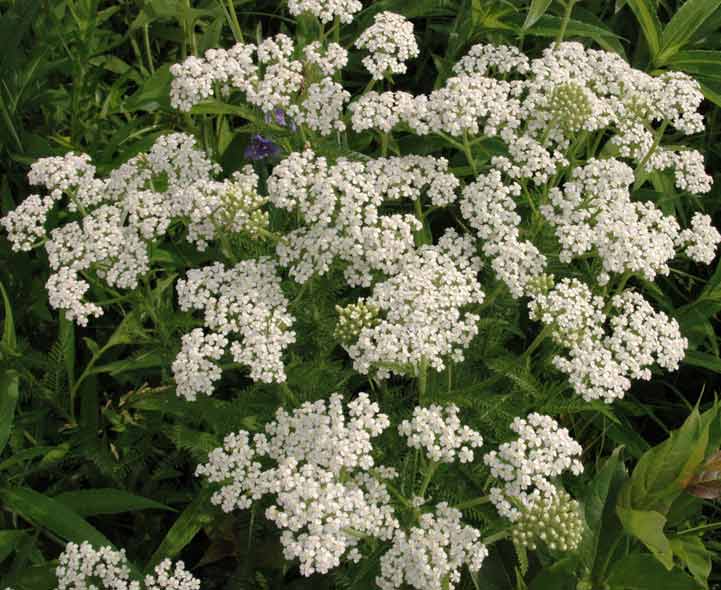
Photograph courtesy of www.flickr.com/photos/gmayfield10/
Yarrow
Creeping thistle
Plantain
Wild sorrel
- Latin Name: Achillea millefolium.
- Known by many different names including nosebleed plant, old man's pepper, devil's nettle, sanguinary, milfoil, soldier's woundwort and thousand-leaf.
- Medicinally it can be used to staunch the flow of blood from a wound.
- Infested lawns can have a mass of very low-growing fern like plants that co-exist happily alongside the grasses.
5 .
Can you identify this weed that is frequently found in lawns?

Photograph courtesy of www.geograph.org.uk/profile/6699
Plantain
Wild sorrel
Clover
Creeping buttercup
- Latin Name: Rumex acetosa.
- Also known as spinach dock and narrow-leaved dock.
- Roots grow deep into the ground.
- Commonly found in the wild and is sometimes cultivated as a herb.
- Its leaves are eaten by many species of butterfly and moth.
6 .
Can you identify this weed that is frequently found in lawns?
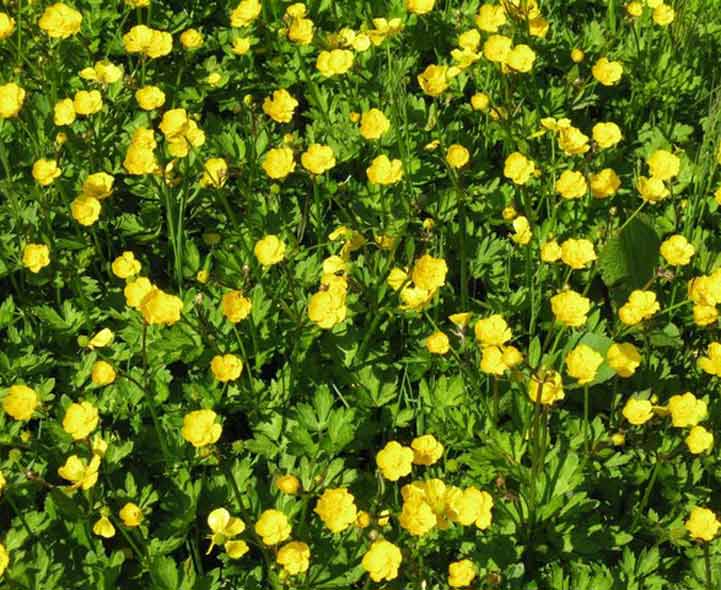
Photograph courtesy of M J Richardson
Creeping thistle
Clover
Creeping buttercup
Yarrow
- Latin Name: Ranunculus repens.
- Has bright golden flowers that are 2 to 3 cm across.
- Plants are poisonous but because they are distasteful they are avoided by grazing cattle and sheep.
- When dried with hay the poisons disappear.
- Stems from the plants steadily creep through a lawn, rooting as they go.
7 .
Can you identify this weed that is frequently found in lawns?
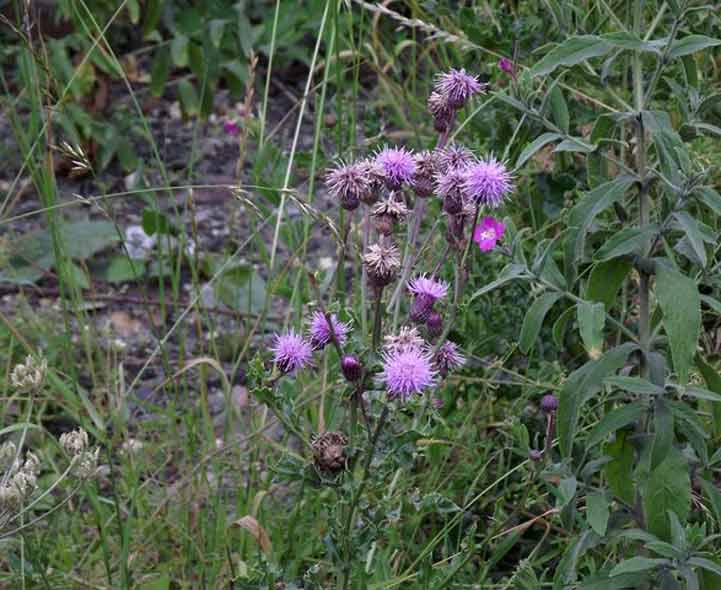
Photograph courtesy of www.geograph.org.uk/profile/67051
Dandelion
Yarrow
Silverweed
Creeping thistle
- Latin Name: Cirsium arvense.
- Flowering heads are much loved by finches, linnets and many species of butterfly but it is best NOT to grow them in your lawn!
- Has spiny leaves that are a menace in lawns used for recreation.
- The fast-growing underground root system can be difficult to kill once established so early eradication is important.
8 .
Can you identify this weed that is frequently found in lawns?

Photograph courtesy of Beeblebrox at Wikipedia
Dandelion
Daisy
Wild sorrel
Clover
- Latin Name: Taraxacum officinale.
- Yellow flower heads change into silver balls of seed that fly off in the wind.
- All parts can be eaten by humans and they are much loved by pet rabbits and guinea pigs.
- Milky sap oozes out if you break a stem.
9 .
Can you identify this weed that is frequently found in lawns?
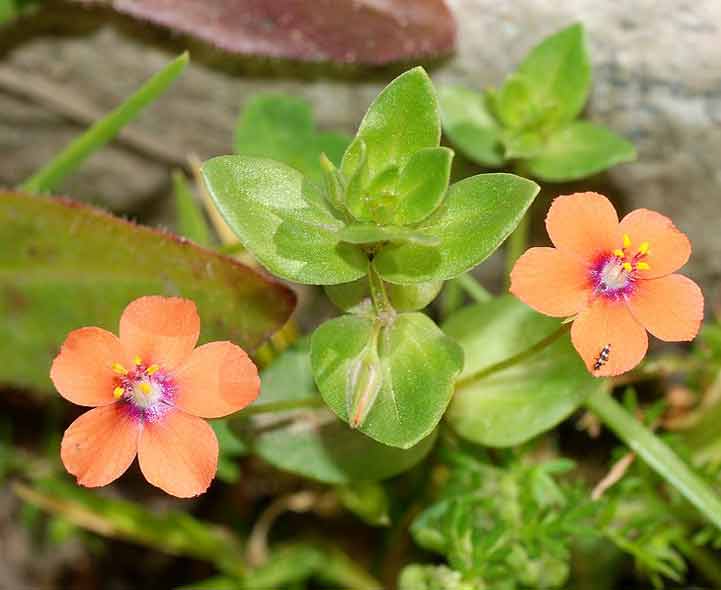
Photograph courtesy of Alvesgaspar
Scarlet pimpernel
Silverweed
Plantain
Clover
- Latin Name: Anagallis arvensis.
- Sometimes called poorman's barometer or poor man's weather-glass on account of the fact that its flowers are open only when the sun is shining.
- One of the nicer weeds! It is seldom very troublesome but its brilliant orange flowers can be very noticeable in an immaculately kept lawn.
- It is the emblem of a famous fictional character.
10 .
Can you identify this weed that is frequently found in lawns?
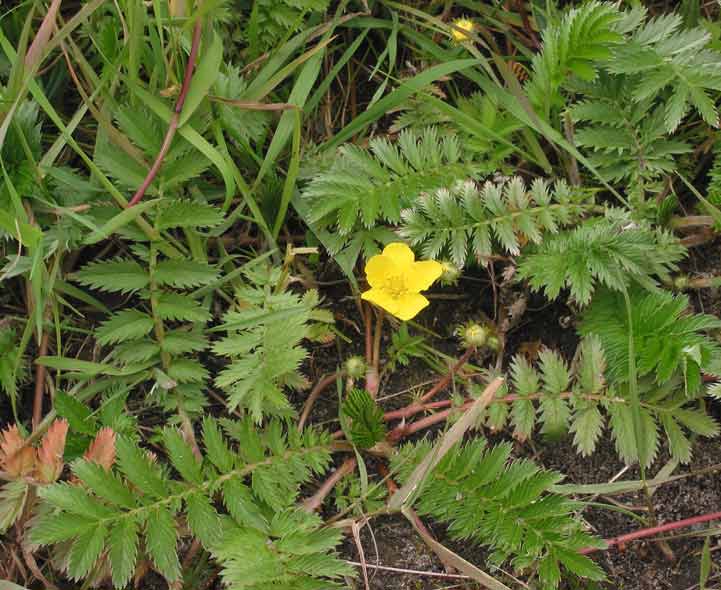
Yarrow
Dandelion
Scarlet pimpernel
Silverweed
- Latin Name: Argentina anserina.
- Belongs to the rose family but you would never guess by looking at it.
- Foliage is covered in silky white hairs - particularly on the underside.
- Has creeping red stolons that can reach out as much as 80 cm from the plant and therefore it can spread through a lawn extremely quickly.
- Particularly fond of sandy soil.



**Unlimited Quizzes Await You! 🚀**
Hey there, quiz champ! 🌟 You've already tackled today's free questions.
Ready for more?
Ready for more?
🔓 Unlock UNLIMITED Quizzes and challenge yourself every day. But that's
not all...
not all...
🔥 As a Subscriber you can join our thrilling "Daily Streak" against other
quizzers. Try to win a coveted spot on our Hall of Fame Page.
quizzers. Try to win a coveted spot on our Hall of Fame Page.
Don't miss out! Join us now and keep the fun rolling. 🎉
**Unlimited Quizzes Await You! 🚀**
Hey there, quiz champ! 🌟 You've already tackled today's free questions. Ready for more?
🔓 Unlock UNLIMITED Quizzes and challenge yourself every day. But that's not all...
🔥 As a Subscriber you can join our thrilling "Daily Streak" against other quizzers. Try to win a coveted spot on our Hall of Fame Page.
Don't miss out! Join us now and keep the fun rolling. 🎉




© Copyright 2016-2026 - Education Quizzes
Work Innovate Ltd - Design | Development |
Marketing
