




Ask the AI Tutor
Need help with The Water Cycle 02? Ask our AI Tutor!
AI Tutor - Lucy
Connecting with Tutor...
Please wait while we establish connection
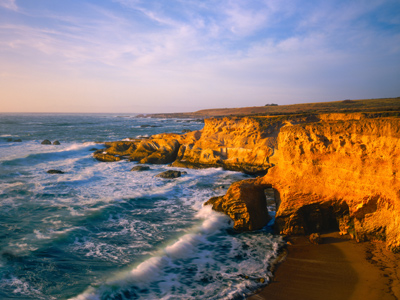
The vast majority of the earth's precipitation falls into the sea.
The Water Cycle 02
Explore how the water cycle moves water and energy around our planet, shaping clouds, rainfall and climates from tropical rainforests to frozen polar regions.
1 .
What process causes clouds to form?
Accumulation
Compensation
Condensation
Stratification
Condensation is the term that is used to describe a change of state from vapour to liquid
2 .
When vegetation stops rain reaching the ground it is called what?
Interception
Interface
Interflow
Interlocution
The water can then evaporate from the leaves and go back into the atmosphere. This is one reason that rainforests have a high humidity
3 .
A wind picks up most moisture when it blows over what?
A large city
A small lake
Mountains
The sea
There is a large surface area from which water is constantly evaporating
4 .
What change takes place during condensation?
Gas to liquid
Gas to solid
Liquid to gas
Solid to liquid
Water vapour (gas) changes to water droplets
5 .
80% of the earth's precipitation falls directly where?
Into drains and sewers
Into lakes
Into the sea
Onto our gardens
That is where most of the water vapour in the atmosphere comes from in the first place
6 .
A hot summer day may lead to what type of rain?
Convection
Depression
Frontal
Relief
The hot air rises as a convection current. As it does, it cools. The water vapour it contains condenses and can fall as rain
7 .
What reduces the amount of surface water runoff?
Gentle slopes
Impermeable rocks
Little vegetation cover
Steep slopes
The gentler the slope the longer the water has to soak in rather than move over the surface
8 .
Surface water heated by the sun leads to what?
A rainbow
A spring
Evaporation
Runoff
Liquids including water evaporate faster when they are warmer
9 .
Which of these would not interrupt the water cycle?
Boreholes
Dams
Desalination plants
Forests
Water is pumped up through boreholes and desalination plants remove salt from seawater
10 .
What cannot be described as precipitation?
A tornado
Dew
Sleet
Snow
A tornado is a rapidly moving spiral of air



**Unlimited Quizzes Await You! 🚀**
Hey there, quiz champ! 🌟 You've already tackled today's free questions.
Ready for more?
Ready for more?
🔓 Unlock UNLIMITED Quizzes and challenge yourself every day. But that's
not all...
not all...
🔥 As a Subscriber you can join our thrilling "Daily Streak" against other
quizzers. Try to win a coveted spot on our Hall of Fame Page.
quizzers. Try to win a coveted spot on our Hall of Fame Page.
Don't miss out! Join us now and keep the fun rolling. 🎉
**Unlimited Quizzes Await You! 🚀**
Hey there, quiz champ! 🌟 You've already tackled today's free questions. Ready for more?
🔓 Unlock UNLIMITED Quizzes and challenge yourself every day. But that's not all...
🔥 As a Subscriber you can join our thrilling "Daily Streak" against other quizzers. Try to win a coveted spot on our Hall of Fame Page.
Don't miss out! Join us now and keep the fun rolling. 🎉




© Copyright 2016-2026 - Education Quizzes
Work Innovate Ltd - Design | Development |
Marketing
