




Ask the AI Tutor
Need help with Solids, Liquids and Gases 02? Ask our AI Tutor!
AI Tutor - Lucy
Connecting with Tutor...
Please wait while we establish connection
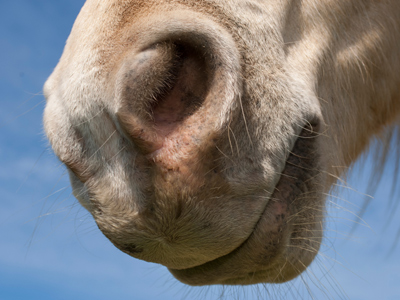
In order to smell, particles from the object must enter your nose. These particles are gas.
Solids, Liquids and Gases 02
Matter can exist in different forms. In KS2 Science, pupils explore solids, liquids, and gases, learning how heating and cooling change one state into another.
1 .
Can sugar become a liquid?
Yes, when it is heated to a very high temperature
Yes, when it is heated to 100° Celsius
Sometimes, depending on what type of sugar it is
Sugar can never become liquid
Sugar becomes liquid at around 186° C - heating sugars to such high temperatures is how sweets are made
2 .
In cooler temperatures, how do the particles of any material move?
More slowly
More quickly
Alternately slowly and quickly
Particles never change how they move
Cooler particles have less energy
3 .
When a material is heated, what happens to its particles?
They lose energy and become more strongly attached (attracted) to other particles
They gain energy and become less strongly attached (attracted) to other particles
They begin to stick together
They stop moving
Heat gives energy to the particles and makes them vibrate or move
4 .
What is solid water called?
Magma
Dry ice
Ice
Water vapour
When water is placed in the freezer, it becomes a solid - ice
5 .
A sweet fizzy drink contains what?
Solid only
Liquid only
Gas only
Solid, liquid and gas
Sweetened fizzy drinks contain solid (sugar), liquid (water) and gas (carbon dioxide)
6 .
Although air is made up of several gases, the two main ones are nitrogen and which other?
Helium
Oxygen
Carbon dioxide
Methane
Animals - including people - need oxygen to breathe!
7 .
Which of the following describes what happens when water evaporates?
Gravity causes the water to run downhill and disappear
The water gradually becomes solid and these solids break away from the liquid
The water doesn't exist any longer
Particles gain enough energy to break free from the liquid's surface
If a particle gets enough energy it leaves the liquid. Particles like this form gases
8 .
What is water called when it is a gas?
Helium
Carbon dioxide
Nitrogen
Water vapour
Water vapour is also called steam. Steam is invisible - what you see rising from a kettle or a pan are water droplets in the air
9 .
In order to smell, particles from the object must enter your nose. In which state of matter are these particles?
Solid
Liquid
Gas
Liquid or gas
You breathe the gas in through your nose and detect any smell which pass through
10 .
In warmer temperatures, how do particles of any material move?
More slowly
More quickly
Alternately slowly and quickly
Particles never change how they move
Warmer particles have more energy



**Unlimited Quizzes Await You! 🚀**
Hey there, quiz champ! 🌟 You've already tackled today's free questions.
Ready for more?
Ready for more?
🔓 Unlock UNLIMITED Quizzes and challenge yourself every day. But that's
not all...
not all...
🔥 As a Subscriber you can join our thrilling "Daily Streak" against other
quizzers. Try to win a coveted spot on our Hall of Fame Page.
quizzers. Try to win a coveted spot on our Hall of Fame Page.
Don't miss out! Join us now and keep the fun rolling. 🎉
**Unlimited Quizzes Await You! 🚀**
Hey there, quiz champ! 🌟 You've already tackled today's free questions. Ready for more?
🔓 Unlock UNLIMITED Quizzes and challenge yourself every day. But that's not all...
🔥 As a Subscriber you can join our thrilling "Daily Streak" against other quizzers. Try to win a coveted spot on our Hall of Fame Page.
Don't miss out! Join us now and keep the fun rolling. 🎉




© Copyright 2016-2026 - Education Quizzes
Work Innovate Ltd - Design | Development |
Marketing
