




Ask the AI Tutor
Need help with Anglo Saxon Invaders? Ask our AI Tutor!
AI Tutor - Lucy
Connecting with Tutor...
Please wait while we establish connection
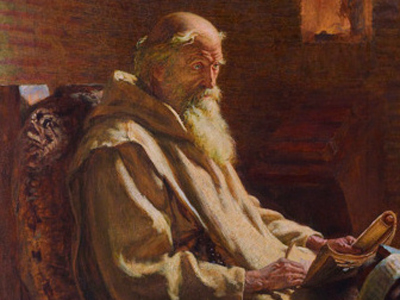
The history of the Anglo Saxons was written by the Venerable Bede, a monk living in 8th Century Jarrow.
Anglo Saxon Invaders
Who were the Anglo-Saxon invaders? Find out why they left their homelands, where they settled in Britain, and how their arrival changed history in this KS2 quiz.
1 .
Where did the Anglo Saxons never invade?
Wales
Scotland
Cornwall
All of these
The Anglo Saxons only conquered what was to become England
2 .
Who was said to have won a great battle against the Anglo Saxons around 500 CE?
Bede
King Arthur
Vortigern
Alfred the Great
No one knows if the stories about King Arthur are true
3 .
Who wrote down the stories about the Anglo Saxon invaders?
Alfred the Great
Bede
King Arthur
Vortigern
Bede was a monk in the 8th Century
4 .
What did the Romans do to prevent the Saxon raids?
Sailed to Germany to defeat the Saxons
Sent more legions to Britain
Nothing
Built coastal forts
These were abandoned in 410 when the Romans left Britain
5 .
Who settled in the South of England?
Angles
Saxons
Jutes
Franks
The Saxons settled in the South - Essex, Sussex, Wessex and Middlesex are all named after them
6 .
Where did the first Saxon invaders come from?
Germany and Denmark
Denmark and France
Germany and Sweden
Germany and France
The ancestors of the English originated in modern day Germany and Denmark
7 .
Who was the British leader that hired other Saxons to help defend their land?
Vortigern
Bede
King Arthur
Alfred the Great
At first they helped him but later attacked him and took his land
8 .
Where did the Angles settle?
Kent and Midlands
Midlands and South
East Anglia, Midlands and the North of England
East Anglia and South
The Angles founded kingdoms in the Midlands (Mercia), East Anglia and the North of England (Northumbria)
9 .
What was the land invaded by the Anglo Saxons named?
Saxony
Britain
England
Anglia
All of the kingdoms of the Anglo Saxons were united by King Æthelstan in 927
10 .
Which of these peoples invaded Britain during the 400s?
Picts and Scots
Angles
Jutes
All of these
Picts and Scots colonised what is now Scotland and Jutes, Angles and Saxons colonised what is now England
You can find more about this topic by visiting BBC Bitesize - Why did the Anglo-Saxons come to Britain?



**Unlimited Quizzes Await You! 🚀**
Hey there, quiz champ! 🌟 You've already tackled today's free questions.
Ready for more?
Ready for more?
🔓 Unlock UNLIMITED Quizzes and challenge yourself every day. But that's
not all...
not all...
🔥 As a Subscriber you can join our thrilling "Daily Streak" against other
quizzers. Try to win a coveted spot on our Hall of Fame Page.
quizzers. Try to win a coveted spot on our Hall of Fame Page.
Don't miss out! Join us now and keep the fun rolling. 🎉
**Unlimited Quizzes Await You! 🚀**
Hey there, quiz champ! 🌟 You've already tackled today's free questions. Ready for more?
🔓 Unlock UNLIMITED Quizzes and challenge yourself every day. But that's not all...
🔥 As a Subscriber you can join our thrilling "Daily Streak" against other quizzers. Try to win a coveted spot on our Hall of Fame Page.
Don't miss out! Join us now and keep the fun rolling. 🎉




© Copyright 2016-2026 - Education Quizzes
Work Innovate Ltd - Design | Development |
Marketing
