




Ask the AI Tutor
Need help with Places 1? Ask our AI Tutor!
AI Tutor - Lucy
Connecting with Tutor...
Please wait while we establish connection
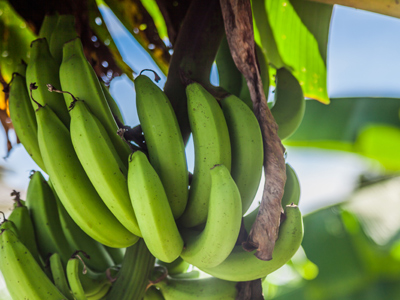
A tropical climate is best for growing bananas.
Places 1
In geography you will compare different places, from quiet countryside villages to busy cities, and discover how jobs, buildings, and land use can change from place to place.
1 .
What type of crops are you likely to find in a temperate climate?
Sugar
Pineapples
Coffee
Wheat
Sugar, pineapples and coffee all prefer tropical climates
2 .
Which climate is best for growing bananas?
Tropical
Temperate
Polar
Arid
Bananas would not grow very well at all in a polar climate!
3 .
What is the main industry in the UK countryside?
Fishing
Farming
Shipping
Coal mining
Almost two thirds of Britain is farmland
4 .
What does population mean?
The number of people living in a place
The number of cars in a place
The number of houses in a place
The number of shops in a place
One place may have fewer cars or shops than another place but more people living in it, therefore a higher population
5 .
What kind of economic activity is a supermarket assistant undertaking?
Primary
Secondary
Tertiary
None of these
Tertiary is when someone is selling it
6 .
Which of these jobs is a primary economic activity?
Greengrocer
Factory worker
Fisherman
Fishmonger
Primary economic activity is 'take it'
7 .
Which of these affects the crops that are grown in a place?
Mountains
Climate and soil
Rivers
Buildings
Different crops prefer different climates or soil types
8 .
How can you find out the location of a place?
Look in a thesaurus
Look in a dictionary
Look on a map
Look at a photograph of the place
Maps show us where in the world places are
9 .
What type of industry are you more likely to find on the coast?
Fishing
Farming
Food production
Recycling plant
Tourism and shipping are also major industries on the coast
10 .
Another way of saying secondary economic activity is?
Take it
Make it
Sell it
Cook it
Primary - Take it
Secondary - Make it
Tertiary - Sell it
Secondary - Make it
Tertiary - Sell it



**Unlimited Quizzes Await You! 🚀**
Hey there, quiz champ! 🌟 You've already tackled today's free questions.
Ready for more?
Ready for more?
🔓 Unlock UNLIMITED Quizzes and challenge yourself every day. But that's
not all...
not all...
🔥 As a Subscriber you can join our thrilling "Daily Streak" against other
quizzers. Try to win a coveted spot on our Hall of Fame Page.
quizzers. Try to win a coveted spot on our Hall of Fame Page.
Don't miss out! Join us now and keep the fun rolling. 🎉
**Unlimited Quizzes Await You! 🚀**
Hey there, quiz champ! 🌟 You've already tackled today's free questions. Ready for more?
🔓 Unlock UNLIMITED Quizzes and challenge yourself every day. But that's not all...
🔥 As a Subscriber you can join our thrilling "Daily Streak" against other quizzers. Try to win a coveted spot on our Hall of Fame Page.
Don't miss out! Join us now and keep the fun rolling. 🎉




© Copyright 2016-2026 - Education Quizzes
Work Innovate Ltd - Design | Development |
Marketing
