




Ask the AI Tutor
Need help with Music History 1? Ask our AI Tutor!
AI Tutor - Lucy
Connecting with Tutor...
Please wait while we establish connection
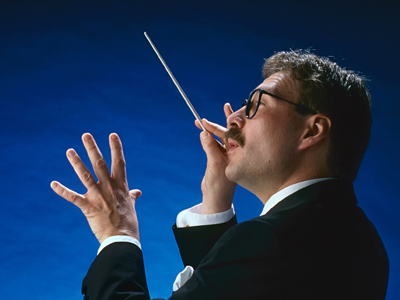
A conductor stands at the front of an orchestra and directs how the musicians should play.
Music History 1
People have made music for thousands of years. This KS1 History quiz explores how instruments changed from simple drums and flutes to the music we enjoy today.
1 .
In about 1000 AD, Christian monks did something which changed music completely. What was it?
They made the first microphone
They devised a way to write down musical notes
They discovered how to build a stadium
They made a music recoding device
This new method of writing down notes was the ancestor of the system we use today
2 .
Mozart, Beethoven and Bach were all famous...
Kings
Knights
Composers
Magicians
Between them, they composed hundreds of pieces of classical music
3 .
The earliest stringed instrument was called a...
lyre
guitar
ukulele
viola
Some lyres have been found which date back to 3000 BC!
4 .
In 1982, music for the home was produced in a new way. What was it?
The CD
The record
The tape cassette
The download
The first recordings were of waltzes by Chopin!
5 .
Why can't we really tell what very early music may have sounded like?
It sounded so bad, everyone wanted to forget it
The sound didn't travel very well
There was no way to write down notes or record music
The musicians forgot what they had played almost instantly
We can tell from pictures and from descriptions that people sometimes played their instruments alone and sometimes in groups
6 .
Early orchestras were quite small but have gradually grown to the point where there are at least 90 musicians and a...
ticket master
ceremony leader
music boss
conductor
The conductor stands at the front of the musicians and directs how they play
7 .
Franz Schubert composed hundreds of pieces of classical music. But what was his nickname?
Little potato
Little cabbage
Little onion
Little mushroom
He wasn't very tall, so this is what his friends called him!
8 .
Many years ago, the earliest music was probably made with...
A full orchestra
Guitars, harps and violins
Recorders, flutes and saxaphones
People singing and clapping their hands
Soon people also began to bang on hollow logs and knock sticks together to make louder sounds; these were the earliest percussion instruments
9 .
It is thought the first wind instruments may have come from...
France
Russia
Egypt
Spain
These were hollow reed pipes with holes in them to put your fingers on to vary the pitch
10 .
Which invention in the late 1800s helped people listen to music at home?
The CD player
The gramophone
The MP3 player
The radio
Thomas Edison (inventor of the modern light bulb) designed the first 'music playing gadget'



**Unlimited Quizzes Await You! 🚀**
Hey there, quiz champ! 🌟 You've already tackled today's free questions.
Ready for more?
Ready for more?
🔓 Unlock UNLIMITED Quizzes and challenge yourself every day. But that's
not all...
not all...
🔥 As a Subscriber you can join our thrilling "Daily Streak" against other
quizzers. Try to win a coveted spot on our Hall of Fame Page.
quizzers. Try to win a coveted spot on our Hall of Fame Page.
Don't miss out! Join us now and keep the fun rolling. 🎉
**Unlimited Quizzes Await You! 🚀**
Hey there, quiz champ! 🌟 You've already tackled today's free questions. Ready for more?
🔓 Unlock UNLIMITED Quizzes and challenge yourself every day. But that's not all...
🔥 As a Subscriber you can join our thrilling "Daily Streak" against other quizzers. Try to win a coveted spot on our Hall of Fame Page.
Don't miss out! Join us now and keep the fun rolling. 🎉




© Copyright 2016-2026 - Education Quizzes
Work Innovate Ltd - Design | Development |
Marketing
