




Ask the AI Tutor
Need help with Unit 1 - Cloning? Ask our AI Tutor!
AI Tutor - Lucy
Connecting with Tutor...
Please wait while we establish connection
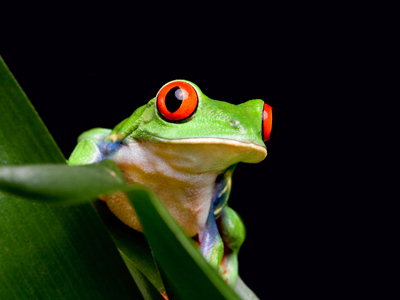
Adult cell cloning was first demonstrated in frogs.
Unit 1 - Cloning
In this GCSE Biology quiz you will revise cloning, from identical plant clones to animals produced by embryo cloning, and think about its benefits, risks, and ethical questions.
1 .
During cloning, what is an electrical current used for?
To stimulate cell division
To destroy the egg cell nucleus
To start growth of the egg
To remove the contents of the fused cells
When cell division has started, the cloned egg cell can be implanted into the surrogate mother
2 .
Enucleate means the removal of what?
A cell
A nucleus
An egg
A sperm
The nucleus is removed to make space for the DNA of the donor animal
3 .
Which gamete cell is needed for cloning?
Sperm
Egg
Brain
Skin
It is the egg cell and not the sperm that develops into an embryo after fertilisation so it is not possible to use the sperm cell for cloning
4 .
Adult cell cloning was first demonstrated in which type of animal?
Sheep
Frogs
Dogs
Chickens
This happened in 1958 and was carried out by a scientist called John Gurden at Oxford university
5 .
A special type of cloning splits apart cells from a developing animal. What is this type of cloning called?
Embryo transplant cloning
Donor cell cloning
Egg cell cloning
Surrogate cloning
Large numbers of genetically identical offspring, with the desired characteristics, can be produced using embryo transplant cloning
6 .
Where is the cloned animal grown?
Test tube
Ovary
Uterus (womb)
Oven
Cloning of animals requires that the embryo is grown naturally in the uterus of a female of the species being cloned
7 .
Cloning has not been demonstrated in which of the following?
Plants
Sheep
Humans
Cattle
It is too controversial to do this but there are some speculative fiction films that attempt to deal with this topic
8 .
What is the animal that gives birth to the cloned animal known as?
A carrier
A suffragette
A surrogate
A sufferer
The cloned egg cells must be stimulated to grow before they can be placed into the uterus of the surrogate mother
9 .
Cloning is an example of which type of reproduction?
Sexual
Asexual
Binary fission
Conjugation
Cloning always produces individuals who are genetically identical to the donor and each other
10 .
The cloned animal has the same DNA as which of the following?
The father
The mother
The surrogate
The donor
The DNA is contained in the nucleus of every cell. Since the donor provides a complete nucleus, the cloned animal will have the same DNA
Our Social Circles




**Unlimited Quizzes Await You! 🚀**
Hey there, quiz champ! 🌟 You've already tackled today's free questions.
Ready for more?
Ready for more?
🔓 Unlock UNLIMITED Quizzes and challenge yourself every day. But that's
not all...
not all...
🔥 As a Subscriber you can join our thrilling "Daily Streak" against other
quizzers. Try to win a coveted spot on our Hall of Fame Page.
quizzers. Try to win a coveted spot on our Hall of Fame Page.
Don't miss out! Join us now and keep the fun rolling. 🎉
**Unlimited Quizzes Await You! 🚀**
Hey there, quiz champ! 🌟 You've already tackled today's free questions. Ready for more?
🔓 Unlock UNLIMITED Quizzes and challenge yourself every day. But that's not all...
🔥 As a Subscriber you can join our thrilling "Daily Streak" against other quizzers. Try to win a coveted spot on our Hall of Fame Page.
Don't miss out! Join us now and keep the fun rolling. 🎉
© Copyright 2016-2026 - Education Quizzes
Work Innovate Ltd - Design | Development |
Marketing
