




Ask the AI Tutor
Need help with Reptiles and Amphibians - Snakes of the World? Ask our AI Tutor!
AI Tutor - Lucy
Connecting with Tutor...
Please wait while we establish connection
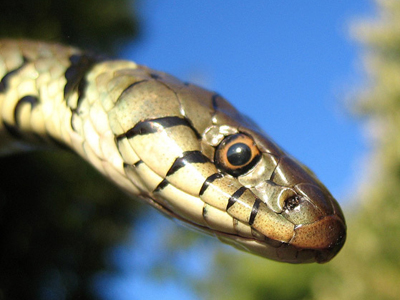
This snake will feign death by becoming totally limp in order to defend itself.
Reptiles and Amphibians - Snakes of the World
Snakes are found in deserts, forests and oceans. Learn how they hunt, sense the world, and survive without legs, then test your knowledge in the quiz below.
To see a larger image, click on the picture.
1 .
Can you identify this snake?

Photograph courtesy of LA Dawson
Hoop snake
Wolf snake
Anaconda
Fierce snake
- Order: Squamata
- Family: Boidae
- Genus: Eunectes
- Species: E. murinus
- One of the world's largest snakes, with an average length of 6.1 m (20 ft).
- Found in South America.
- Habitat is swamps, marshes and streams.
- Cannibalism has been observed in this species.
2 .
Can you identify this snake?

Photograph courtesy of http://www.boapython.ch/
Python
Copperhead
Stiletto snake
Tiger snake
- Order: Squamata
- Suborder: Serpentes
- Family: Pythonidae
- Genus: Python
- Primarily found in Africa.
- The skin of this snake is used to make a popular Chinese instrument called the Erhu.
- Non-venomous, it crushes its victims with an incredibly muscular body.
- When the heart of the victim stops, the snake will swallow its prey whole.
- It can sometimes take months to digest.
- Usually eats only 4 to 5 times a year.
3 .
Can you identify this snake?

Photograph courtesy of H. Krisp
Egyptian cobra
Boa constrictor
Indian cobra
Viper
- Order: Squamata
- Suborder: Serpentes
- Family: Viperidae
- Has a pair of long hollow fangs with which to give a venomous bite.
- The Adder branch of this species is the only venomous snake found in the UK.
- Its mouth is capable of opening to nearly 180o.
- Generally nocturnal.
4 .
Can you identify this snake?
Photograph courtesy of jon hanson
Fierce snake
Sea snake
Rattlesnake
Black mamba
- Order: Squamata
- Suborder: Serpentes
- Family: Elapidae
- Subfamily: Hydrophiinae
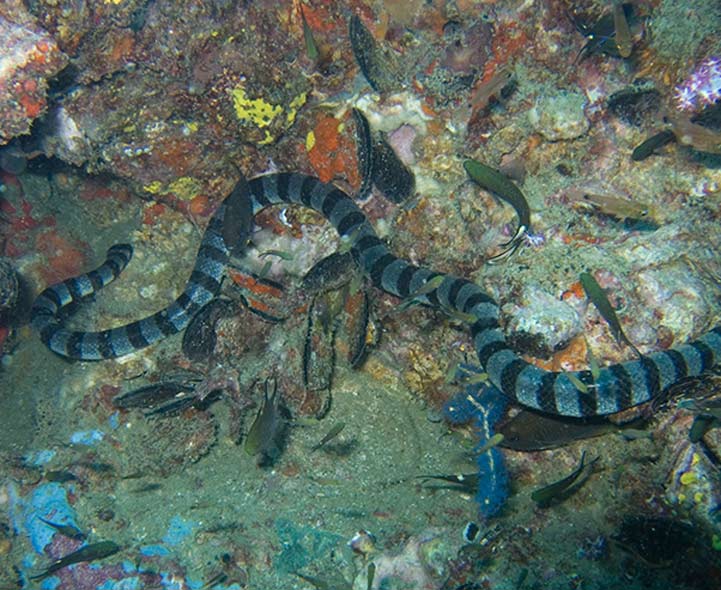
- Inhabits marine environments.
- Huge aggregations of this species have been reported. In 1932 millions were seen from a steamer off the coast of Malaysia. They formed a line of snakes 3 m (9.8 ft) wide and 100 km (62 mi) long!
5 .
Can you identify this snake?

Photograph courtesy of CharlesC
Flying snake
Ground snake
Green snake
Grass snake
- Order: Squamata
- Family: Colubridae
- Genus: Natrix
- Species: N. natrix
- A European non-poisonous snake.
- Found mostly near water.
- Consumes prey live without using constriction.
- To defend themselves, this snake will feign death by becoming totally limp.
6 .
Can you identify this snake?

Photograph courtesy of Tad Arensmeier
Rattlesnake
Cottonmouth
Wolf snake
Hoop snake
- Order: Squamata
- Suborder: Serpentes
- Family: Viperidae
- Subfamily: Crotalinae
- Even when dead, this snake can still bite if you get too close!
- The snake's heat sensors remain active until rigor mortis is complete, a day or more later.
- Placing a warm object, such as your hand, near the snake's mouth will still cause it to have a go!
7 .
Can you identify this snake?

Photograph courtesy of TimVickers
Diamondback
Black mamba
Inland Taipan
Wolf snake
- Order: Squamata
- Family: Elapidae
- Genus: Dendroaspis
- Species: D. polylepis
- A notorious African snaker that can reach speeds of up to 20 kmh (12.5 mph).
- Before the advent of an antivenom, a bite from this fearsome serpent was 100 percent fatal, usually within about 20 minutes.
8 .
Can you identify this snake?
Photograph courtesy of http://renaud.davout.org/
Harlequin snake
Copperhead
Indian cobra
Diamondback
- Order: Squamata
- Family: Elapidae
- Genus: Naja
- Species: N. naja
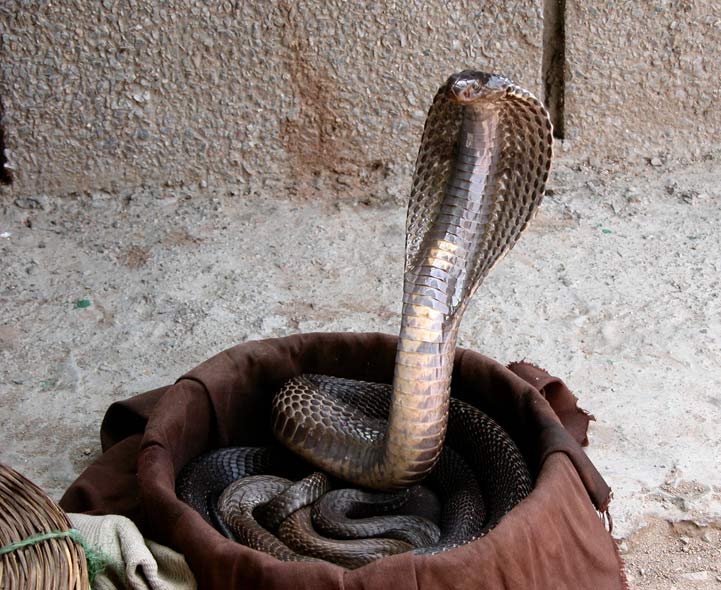
- A highly venomous snake and in severe bites can lead to cardiac arrest.
- Well known as the snake of snake charmers.
- The snake is deaf to the charmer's pipe, but uses sight to follow the moving pipe as well as sensing vibrations from the tapping of the charmer's foot.
9 .
Can you identify this snake?

Photograph courtesy of Pavel Ševela
Boa constrictor
Copperhead
Indigo snake
Cottonmouth
- Order: Squamata
- Family: Boidae
- Genus: Boa
- Species: B. constrictor
- Non-poisonous, nonetheless just as deadly.
- Use their flicking tongue to pick up a scent.
- Live in tropical environments and are found on the ground and in trees.
- A solitary and nocturnal snake.
10 .
Can you identify this snake?
Photograph courtesy of Head
Dice snake
Sea snake
Egyptian cobra
Viper
- Order: Squamata
- Family: Elapidae
- Genus: Naja
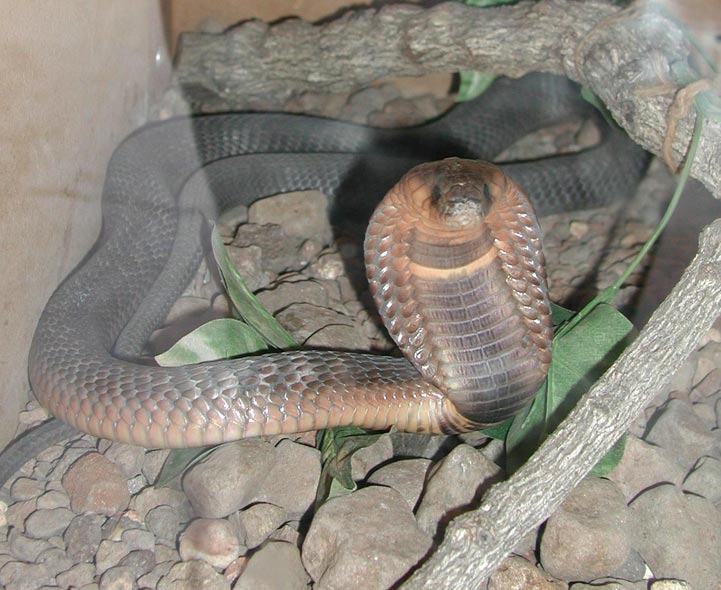
- Species: N. haje
- Found in Africa and the Arabian Peninsula.
- Terrestrial and nocturnal in the wild.
- Represented in mythology by the goddess Meretseger.
- Recognisable by its large head and hood.



**Unlimited Quizzes Await You! 🚀**
Hey there, quiz champ! 🌟 You've already tackled today's free questions.
Ready for more?
Ready for more?
🔓 Unlock UNLIMITED Quizzes and challenge yourself every day. But that's
not all...
not all...
🔥 As a Subscriber you can join our thrilling "Daily Streak" against other
quizzers. Try to win a coveted spot on our Hall of Fame Page.
quizzers. Try to win a coveted spot on our Hall of Fame Page.
Don't miss out! Join us now and keep the fun rolling. 🎉
**Unlimited Quizzes Await You! 🚀**
Hey there, quiz champ! 🌟 You've already tackled today's free questions. Ready for more?
🔓 Unlock UNLIMITED Quizzes and challenge yourself every day. But that's not all...
🔥 As a Subscriber you can join our thrilling "Daily Streak" against other quizzers. Try to win a coveted spot on our Hall of Fame Page.
Don't miss out! Join us now and keep the fun rolling. 🎉




© Copyright 2016-2026 - Education Quizzes
Work Innovate Ltd - Design | Development |
Marketing
