




Ask the AI Tutor
Need help with British Birds - Martins, Swallows, Pipits and Wagtails? Ask our AI Tutor!
AI Tutor - Lucy
Connecting with Tutor...
Please wait while we establish connection
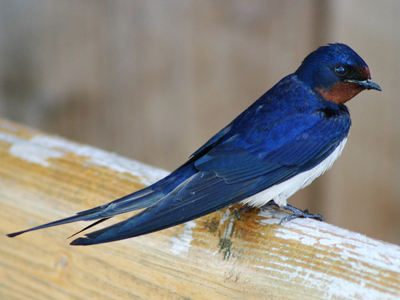
This species lives in close association with humans, and its insect-eating habits mean that it is tolerated by man. Do you know what it is?
British Birds - Martins, Swallows, Pipits and Wagtails
Meet the fast fliers of Britain. This quiz explores martins, swallows, pipits and wagtails, plus the clues birdwatchers use to tell them apart.
To see a larger image, click on the picture.
1 .
What is the name of this bird?

Photograph courtesy of www.geograph.org.uk/profile/13903
Sand Martin
Water Pipit
Pied Wagtail
Grey Wagtail
- Group: Wagtails and Pipits
- Binomial: Motacilla alba
- Order: Passeriformes
- Family: Motacillidae
- Status: Breeding Summer Visitor
- The most distinctive feature is its wagging tail - it never stops!
- Can be seen dashing about over lawns or car parks in search of food.
- Often gathers at dusk to form large roosts in city centres.
2 .
What is the name of this bird?

Photograph courtesy of Omar Runolfsson
House Martin
Pied Wagtail
Water Pipit
Rock Pipit
- Group: Swallows and Martins
- Binomial: Delichon urbicum
- Order: Passeriformes
- Family: Hirundinidae
- Status: Breeding Summer Visitor
- It spends much of its time on the wing collecting insect prey.
- The bird's mud nest is usually sited below the eaves of buildings.
- Mostly associated with man, found around towns and villages.
3 .
What is the name of this bird?
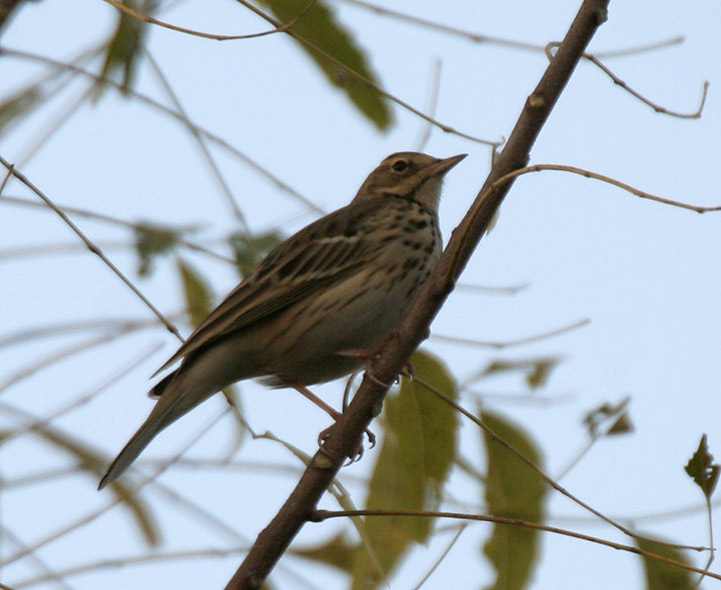
Photograph courtesy of J M Garg
Water Pipit
Grey Wagtail
Tree Pipit
Rock Pipit
- Group: Wagtails and Pipits
- Binomial: Anthus trivialis
- Order: Passeriformes
- Family: Motacillidae
- Status: Breeding Summer Visitor
- The song flight is unmistakable.
- The bird rises a short distance up from a tree, and then parachutes down on stiff wings, the song becoming more drawn out towards the end.
- The call is a strong 'spek'.
4 .
What is the name of this bird?

Photograph courtesy of Malene Thyssen
Meadow Pipit
Tree Pipit
Barn Swallow
House Martin
- Group: Swallows and Martins
- Binomial: Hirundo rustica
- Order: Passeriformes
- Family: Hirundinidae
- Status: Breeding Summer Visitor
- This species lives in close association with humans, and its insect-eating habits mean that it is tolerated by man; this acceptance was reinforced in the past by superstitions regarding the bird and its nest.
5 .
What is the name of this bird?

Photograph courtesy of touch_of_frost
Water Pipit
Grey Wagtail
Yellow Wagtail
Meadow Pipit
- Group: Wagtails and Pipits
- Binomial: Motacilla flava flavissima
- Order: Passeriformes
- Family: Motacillidae
- Status: Breeding Summer Visitor
- The call is a characteristic high-pitched 'jeet'.
- This insectivorous bird inhabits open country near water.
- It nests in tussocks, laying 4-8 speckled eggs.
6 .
What is the name of this bird?
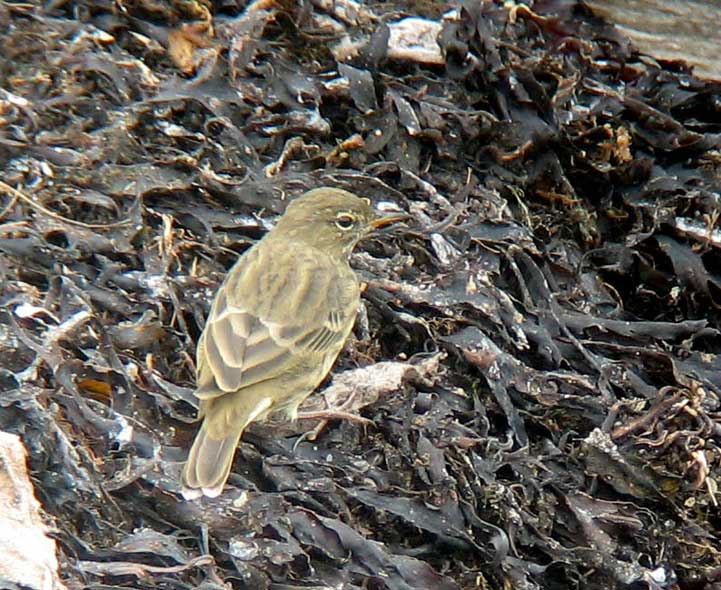
Photograph courtesy of MPF
Rock Pipit
Tree Pipit
Pied Wagtail
Yellow Wagtail
- Group: Wagtails and Pipits
- Binomial: Anthus petrosus
- Order: Passeriformes
- Family: Motacillidae
- Status: Resident Breeding Species
- Some birds arrive here from Norway to spend the winter.
- The song is a series of 'blocks' of repeated more or less shrill cheeping single or double notes; it ends on a trill.
- This species is insectivorous.
7 .
What is the name of this bird?

Photograph courtesy of Myosotis Scorpioides
Rock Pipit
Water Pipit
Meadow Pipit
Pied Wagtail
- Group: Wagtails and Pipits
- Binomial: Anthus pratensis
- Order: Passeriformes
- Family: Motacillidae
- Status: Resident Breeding Species
- A small, brown, streaky bird
- It is the commonest songbird in upland areas and its high, piping call is a familiar sound.
- Will even come to suburban parks and playing fields.
8 .
What is the name of this bird?
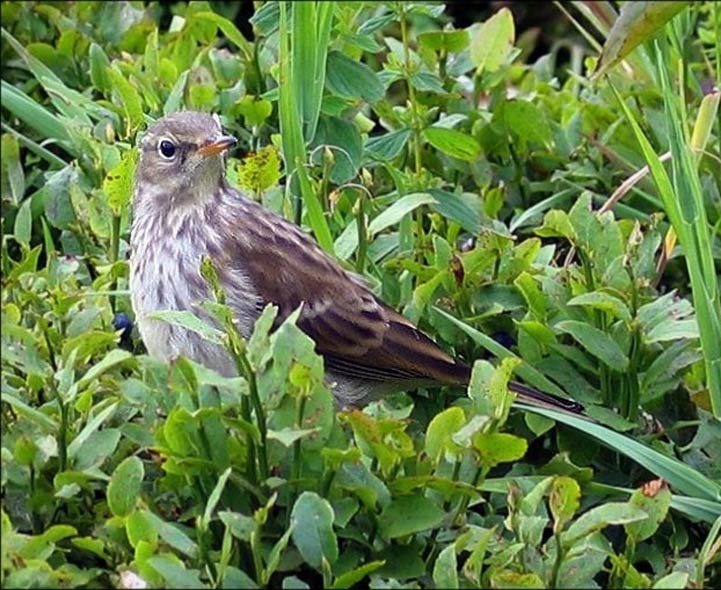
Photograph courtesy of Marboline
Rock Pipit
Water Pipit
House Martin
Pied Wagtail
- Group: Wagtails and Pipits
- Binomial: Anthus spinoletta
- Order: Passeriformes
- Family: Motacillidae
- Status: Winter Visitor
- It is greyish-brown above and pale below with streaks on its breast.
- It has a pale stripe over its eye, a slender bill and dark legs.
- Mainly visits southern and eastern England.
9 .
What is the name of this bird?
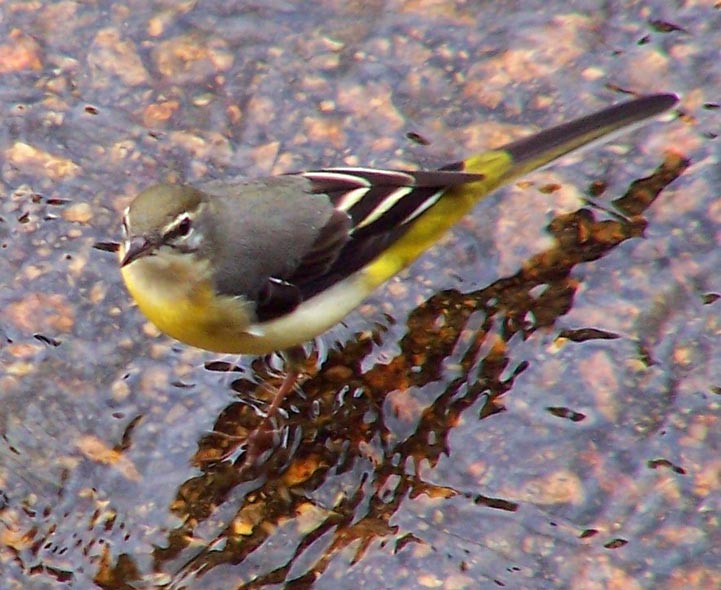
Photograph courtesy of Kclama
Grey Wagtail
Barn Swallow
Pied Wagtail
Water Pipit
- Group: Wagtails and Pipits
- Binomial: Motacilla cinerea
- Order: Passeriformes
- Family: Motacillidae
- Status: Resident Breeding Species
- Their diet comprises insects, such as midges and ants, which they find alongside rivers, etc.
- They will also take water snails and tadpoles from shallow water.
- The young are fed by both parents.
10 .
What is the name of this bird?

Photograph courtesy of Ejdzej
Meadow Pipit
Sand Martin
House Martin
Barn Swallow
- Group: Swallows and Martins
- Binomial: Riparia riparia
- Order: Passeriformes
- Family: Hirundinidae
- Status: Breeding Summer Visitor
- These birds are summer visitors and are among the earliest spring arrivals, often arriving in early March.
- They start their return journey to southern Africa for the winter in August.



**Unlimited Quizzes Await You! 🚀**
Hey there, quiz champ! 🌟 You've already tackled today's free questions.
Ready for more?
Ready for more?
🔓 Unlock UNLIMITED Quizzes and challenge yourself every day. But that's
not all...
not all...
🔥 As a Subscriber you can join our thrilling "Daily Streak" against other
quizzers. Try to win a coveted spot on our Hall of Fame Page.
quizzers. Try to win a coveted spot on our Hall of Fame Page.
Don't miss out! Join us now and keep the fun rolling. 🎉
**Unlimited Quizzes Await You! 🚀**
Hey there, quiz champ! 🌟 You've already tackled today's free questions. Ready for more?
🔓 Unlock UNLIMITED Quizzes and challenge yourself every day. But that's not all...
🔥 As a Subscriber you can join our thrilling "Daily Streak" against other quizzers. Try to win a coveted spot on our Hall of Fame Page.
Don't miss out! Join us now and keep the fun rolling. 🎉




© Copyright 2016-2026 - Education Quizzes
Work Innovate Ltd - Design | Development |
Marketing
