




Ask the AI Tutor
Need help with British Birds - Coots, Crakes, Rails and Plovers? Ask our AI Tutor!
AI Tutor - Lucy
Connecting with Tutor...
Please wait while we establish connection
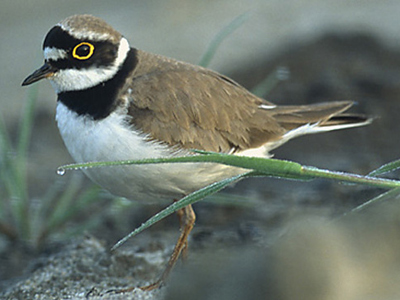
It first bred in the UK in 1938 but what bird is it?
British Birds - Coots, Crakes, Rails and Plovers
Explore wetland and shore birds like coots, rails and plovers. Learn where they live, how they feed, and the clues that help you identify them.
To see a larger image, click on the picture.
1 .
What is the name of this bird?

Photograph courtesy of http://photo-natur.de/
Coot
Ringed Plover
Corn Crake
Northern Lapwing
- Group: Plovers and Lapwings
- Binomial: Vanellus vanellus
- Order: Charadriiformes
- Family: Charadriidae
- Status: Resident Breeding Species
- This is a vocal bird in the breeding season, with constant calling as the crazed tumbling display flight is performed by the male.
- The species prefers to feed at night when there are moonlit nights.
2 .
What is the name of this bird?

Photograph courtesy of http://www.bjornfree.com/galleries.html
Eurasian Golden Plover
Water Rail
Ringed Plover
Little Ringed Plover
- Group: Plovers and Lapwings
- Binomial: Pluvialis apricaria
- Order: Charadriiformes
- Family: Charadriidae
- Status: Winter Visitor And Passage Migrant
- These birds will feed by moonlight.
- They eat insects, crustaceans and berries.
- They typically stand upright and run in short bursts.
3 .
What is the name of this bird?

Photograph courtesy of Dr Helwig Brunner
Grey Plover
Eurasian Dotterel
Ringed Plover
Water Rail
- Group: Plovers and Lapwings
- Binomial: Charadrius morinellus
- Order: Charadriiformes
- Family: Charadriidae
- Status: Breeding Summer Visitor
- This bird is unusual in that the adult female is brighter than the male - an indication of their role-reversal in raising the young.
- The female's song is a simple repetitive whistle.
4 .
What is the name of this bird?

Photograph courtesy of Martial2010
Lapwing
Water Rail
Corn Crake
Common Moorhen
- Group: Rails, Crakes and Coots
- Binomial: Rallus aquaticus
- Order: Gruiformes
- Family: Rallidae
- Status: Resident Breeding Species
- It is a vocal species which gives its main call, known as 'sharming', throughout the year.
- This is a series of grunts followed by a high-pitched piglet-like squeal and ending in more grunts.
5 .
What is the name of this bird?

Photograph courtesy of R H Walpole
Coot
Grey Plover
Common Moorhen
Water Rail
- Group: Rails, Crakes and Coots
- Binomial: Fulica atra
- Order: Gruiformes
- Family: Rallidae
- Status: Resident Breeding Species
- It can walk and run vigorously on strong legs, and has long toes that are well adapted to soft, uneven surfaces.
- These birds are omnivorous, taking mainly plant material, but also small animals and eggs.
6 .
What is the name of this bird?

Photograph courtesy of http://www.marekszczepanek.pl/
Water Rail
Eurasian Dotterel
Little Ringed Plover
Ringed Plover
- Group: Plovers and Lapwings
- Binomial: Charadrius dubius
- Order: Charadriiformes
- Family: Charadriidae
- Status: Breeding Summer Visitor
- It first bred in the UK in 1938 and since then has successfully colonised a large part of England and Wales thanks to man-made habitats such as gravel pits.
- Both male and female take turns to incubate the eggs.
7 .
What is the name of this bird?

Photograph courtesy of Myosotis Scorpioides
Little Ringed Plover
Ringed Plover
Corn Crake
Common Moorhen
- Group: Plovers and Lapwings
- Binomial: Charadrius hiaticula
- Order: Charadriiformes
- Family: Charadriidae
- Status: Resident Breeding Species And Summer Visitor
- A dumpy, short-legged wading bird.
- If a potential predator approaches the nest, the adult will walk away from the scrape, calling to attract the intruder and feigning a broken wing.
8 .
What is the name of this bird?

Photograph courtesy of Rachel Davies
Water Rail
Eurasian Dotterel
Ringed Plover
Corn Crake
- Group: Rails, Crakes and Coots
- Binomial: Crex crex
- Order: Gruiformes
- Family: Rallidae
- Status: Breeding Summer Visitor
- Lives on dry land.
- The male's advertising call is a loud, repetitive, grating krek krek.
- The call can be heard from 1.5 km (1 mile) away, and serves to establish the breeding territory and attract females.
9 .
What is the name of this bird?
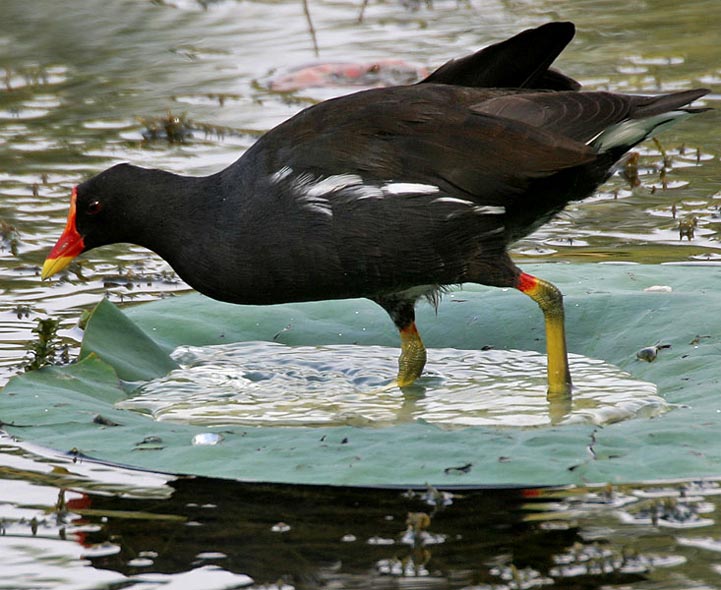
Photograph courtesy of J M Garg
Common Moorhen
Lapwing
Coot
Little Ringed Plover
- Group: Rails, Crakes and Coots
- Binomial: Gallinula chloropus
- Order: Gruiformes
- Family: Rallidae
- Status: Resident Breeding Species
- Tend to be solitary.
- Though they appear placid, fighting is common and often prolonged.
- Each bird strikes the other violently with the feet and even attempts to push or drag them underwater.
10 .
What is the name of this bird?

Photograph courtesy of http://www.fws.gov/
Grey Plover
Coot
Eurasian Golden Plover
Common Moorhen
- Group: Plovers and Lapwings
- Binomial: Pluvialis squatarola
- Order: Charadriiformes
- Family: Charadriidae
- Status: Winter Visitor And Passage Migrant
- It makes regular non-stop transcontinental flights over Asia, Europe and North America.
- It only lands occasionally if forced down by severe weather.



**Unlimited Quizzes Await You! 🚀**
Hey there, quiz champ! 🌟 You've already tackled today's free questions.
Ready for more?
Ready for more?
🔓 Unlock UNLIMITED Quizzes and challenge yourself every day. But that's
not all...
not all...
🔥 As a Subscriber you can join our thrilling "Daily Streak" against other
quizzers. Try to win a coveted spot on our Hall of Fame Page.
quizzers. Try to win a coveted spot on our Hall of Fame Page.
Don't miss out! Join us now and keep the fun rolling. 🎉
**Unlimited Quizzes Await You! 🚀**
Hey there, quiz champ! 🌟 You've already tackled today's free questions. Ready for more?
🔓 Unlock UNLIMITED Quizzes and challenge yourself every day. But that's not all...
🔥 As a Subscriber you can join our thrilling "Daily Streak" against other quizzers. Try to win a coveted spot on our Hall of Fame Page.
Don't miss out! Join us now and keep the fun rolling. 🎉




© Copyright 2016-2026 - Education Quizzes
Work Innovate Ltd - Design | Development |
Marketing
