




Ask the AI Tutor
Need help with The Language of Art? Ask our AI Tutor!
AI Tutor - Lucy
Connecting with Tutor...
Please wait while we establish connection
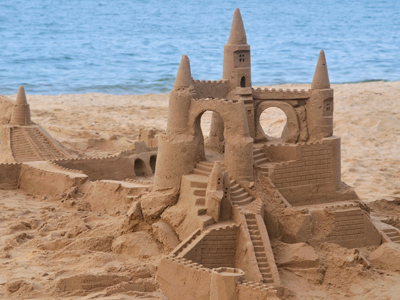
Sculptors can work with lots of materials - even sand!
The Language of Art
Learn the language of art, line, shape, colour, tone, pattern, and texture, so you can describe artworks clearly and make smarter choices in your own drawings and paintings.
1 .
What could be created with a printing block which is used over and over again?
A pretty big mess
A repeating pattern
A lot of hard work
An unusual scene
Repeating patterns can have all sorts of uses, especially when printed onto fabric
2 .
What is the process in which artists decide where elements will go in a piece of work?
Considering the evidence
Considering the rules
Considering the composition
Considering the dreams
Good composition has a pleasing effect on the finished work
3 .
Primary, secondary, complementary and contrasting all refer to what?
Colours
Schools
Conversations
Eye tests
Understanding colours and how they can be mixed to create other colours is an important skill for artists
4 .
There are two ways of describing the orientation of a standard canvas. What are they?
Upside-down and back to front
Sideways and longways
Portrait and landscape
Inside and outside
Portraits are usually painted on canvasses which have the short side at the bottom, while landscapes are usually painted on canvasses which have the long side at the bottom
5 .
People who make and design clothing or other items made from fabric are said to be what kind of artists?
Understanding
Fake
Material
Textile
Textile art covers fashion design, as well as other areas where fabric is the main material used
6 .
Art is wide and varied and artists use a huge amount of different what?
Different materials
Different glue sticks
Different corners
Different pebbles
Any material you can think of has probably been used in an artwork at some point!
7 .
Before creating artwork, what do most artists make first?
'Phone calls
Cakes
Cabinets
Sketches
Sketches help to form ideas and test techniques to be used in the main piece
8 .
To create darker areas in a piece, an artist may use pencils or charcoal to do what?
Outline
Shade
Erase
Undo
Shading can help objects appear more realistic and three-dimensional
9 .
Artists working mainly in three-dimensional materials are usually called what?
Sculptors
Makers
Movers
Shakers
Sculptors work with lots of different materials - ice, sand, clay, glass, metal and wood are just a few
10 .
Works of art which are not life-like or realistic are sometimes referred to as what?
Abseil
Absence
Abound
Abstract
Abstract art is always interesting to look at and talk about!



**Unlimited Quizzes Await You! 🚀**
Hey there, quiz champ! 🌟 You've already tackled today's free questions.
Ready for more?
Ready for more?
🔓 Unlock UNLIMITED Quizzes and challenge yourself every day. But that's
not all...
not all...
🔥 As a Subscriber you can join our thrilling "Daily Streak" against other
quizzers. Try to win a coveted spot on our Hall of Fame Page.
quizzers. Try to win a coveted spot on our Hall of Fame Page.
Don't miss out! Join us now and keep the fun rolling. 🎉
**Unlimited Quizzes Await You! 🚀**
Hey there, quiz champ! 🌟 You've already tackled today's free questions. Ready for more?
🔓 Unlock UNLIMITED Quizzes and challenge yourself every day. But that's not all...
🔥 As a Subscriber you can join our thrilling "Daily Streak" against other quizzers. Try to win a coveted spot on our Hall of Fame Page.
Don't miss out! Join us now and keep the fun rolling. 🎉




© Copyright 2016-2026 - Education Quizzes
Work Innovate Ltd - Design | Development |
Marketing
