




Ask the AI Tutor
Need help with Coastline Features? Ask our AI Tutor!
AI Tutor - Lucy
Connecting with Tutor...
Please wait while we establish connection
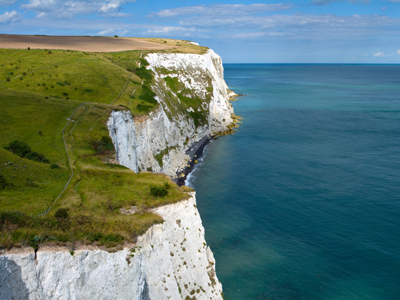
You might see cliffs at the seaside, but don't stand too close to their edges!
Coastline Features
Coasts are where land meets the sea. Explore sandy beaches, rocky cliffs, and rock pools to discover the special features of the coastline.
1 .
Great Britain is an island. There is sea all round it. Where the land meets the sea is called the _____.
Estuary
Equator
Coast
Pole
Where is the nearest seaside where you live?
2 .
The narrow strip all round the coast where the sea meets the land is called the _____.
Boundary
Border
Shore
Pavement
Sometimes this is called the shoreline
3 .
Sam is at the seaside with his parents. They go to a part of the shore with sand and pebbles. This is called the _____.
Estuary
Marsh
Border
Beach
Only some parts of the shore are safe to play on
4 .
Sam has taken his bucket and spade. Which part of the beach does he build castles on?
The sand
The shingle
The pebbles
The rocks
Have you ever built sandcastles on a beach?
5 .
Sam picks up a small, smooth rounded stone on the beach. Sam has picked up a ______.
Rock
Brick
Pebble
Shell
Do you like collecting pebbles and shells on the beach?
6 .
It is time for Sam and his family to go home. They walk back up the beach. They cross the flat, golden sands. Then they walk up a bank of small stones. This is called _______. After that they walk through the sand-dunes and back to the car.
Concrete
Cement
Shingle
Rocks
It is hard walking on shingle
7 .
Some parts of the coast have high hills that fall straight into the sea. These are called ______.
Waterfalls
Cliffs
Mountains
Estuaries
Never go near the cliff edge
8 .
Rivers run into the sea. The River Thames flows into the North Sea. As it reaches the sea, it becomes very wide and forms an _______.
Delta
Estuary
Lake
Rock pool
Which other rivers in the British Isles have wide estuaries? Can you find them on a map?
9 .
Sometimes there is a lot of dry sand at the back of a beach. Tough grass grows through this sand. The sand forms _____.
Mountains
Cliffs
Dunes
Fields
The grass helps stop the sand from blowing away
10 .
The sea comes in and goes out twice a day. One day Sam and his family go to the beach, but the sea is covering all the sand right up to the back of the beach. Sam’s Mum says that the ____ is in.
Ocean
Beach
Tide
Sand
There are two tides every day



**Unlimited Quizzes Await You! 🚀**
Hey there, quiz champ! 🌟 You've already tackled today's free questions.
Ready for more?
Ready for more?
🔓 Unlock UNLIMITED Quizzes and challenge yourself every day. But that's
not all...
not all...
🔥 As a Subscriber you can join our thrilling "Daily Streak" against other
quizzers. Try to win a coveted spot on our Hall of Fame Page.
quizzers. Try to win a coveted spot on our Hall of Fame Page.
Don't miss out! Join us now and keep the fun rolling. 🎉
**Unlimited Quizzes Await You! 🚀**
Hey there, quiz champ! 🌟 You've already tackled today's free questions. Ready for more?
🔓 Unlock UNLIMITED Quizzes and challenge yourself every day. But that's not all...
🔥 As a Subscriber you can join our thrilling "Daily Streak" against other quizzers. Try to win a coveted spot on our Hall of Fame Page.
Don't miss out! Join us now and keep the fun rolling. 🎉




© Copyright 2016-2026 - Education Quizzes
Work Innovate Ltd - Design | Development |
Marketing
