




Ask the AI Tutor
Need help with World War One Aftermath: The Peace Settlement - Reactions Of Britain, USA, France, Italy And Germany? Ask our AI Tutor!
AI Tutor - Lucy
Connecting with Tutor...
Please wait while we establish connection
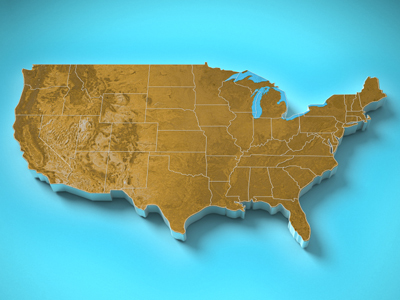
After the war the USA followed a policy of isolationism, which delayed its involvement in World War Two.
World War One Aftermath: The Peace Settlement - Reactions Of Britain, USA, France, Italy And Germany
Test your GCSE History understanding of reactions to the Treaty of Versailles, as different countries judged whether the peace settlement was fair, too harsh, or not harsh enough.
1 .
Which member of the British Treasury delegation to Versailles resigned in protest at the harshness of the terms - particularly with regard to reparations? He returned to Britain and wrote "The Economic Consequences of the Peace".
Harold Nicolson
John Maynard Keynes
Eyre Crowe
Austen Chamberlain
Many British officials felt that the treaty was so harsh as to be unworkable. Britain had suffered less than Belgium and France, and - once naval and colonial questions had been resolved - was keen to resume trading relations with Germany
2 .
Which leading French politician (and future prime minister), who had not led his country's delegation at Versailles, insisted on a sharp reaction to any attempt by Germany to evade the treaty's terms?
Aristide Briand
Raymond Poincare
Maginot
Georges Clemenceau
Distrust of Germany lingered long in French minds after the war. After the failure of Britain and the United States to persuade their parliaments to safeguard the terms of Versailles by armed force, the French were determined to take action on their own or assisted by their Belgian allies
3 .
The United States Senate refused to ratify the Treaty of Versailles, and thus the US did not join the League of Nations. What was the main reason for American suspicion of the League?
The expense of membership would be a drain on the national finances
The USA would be dragged once again into petty European quarrels, leading to fresh wars
The influence of the USA would be diluted among many minor powers, even on the Council of the League
The USA would find it difficult to re-establish peaceful relations with the defeated states from the Great War
President Woodrow Wilson ruined his health by undertaking a nationwide speaking campaign to persuade Americans to embrace League membership. His political opponents in the Republican Party rapidly gathered support for hostility to the treaty and the League
4 .
German opinion objected above all to a particular clause in the treaty that assigned all blame for starting the war to Germany. Thus, Germany was held responsible for all loss and damage that occurred in the war. What was this clause called?
The Responsibility Clause
The Blame Clause
The War Guilt Clause
Clause 241
Some Germans were prepared to accept a measure of blame for the outbreak of war, but they expected other states to agree to some blame themselves. This clause was seen as "victor's justice"
5 .
Which port just east of the Pula peninsula was denied to Italy in 1919, and given to Yugoslavia instead?
Trieste
Split
Zara
Fiume
This was a town with a substantial Italian population, which Italy claimed to have been promised in the Treaty of London of May 1915
6 .
Which Italian poet and man of action embarrassed the Italian government by seizing for Italy the port of Fiume in defiance of international opinion?
Benito Mussolini
Count Ciano
Gabriele D'Annunzio
Benedetto Croce
The elected Italian government could do little to prevent this defiance of the terms of the 1919-20 settlements, although many Italians felt strongly that they had been cheated of the spoils of war, and betrayed by their allies
7 .
What name is usually given to the American policy of avoiding foreign commitments after the experience of the Great War?
Isolationism
Neutralism
Separatism
Neutrality
This policy was even supported by Charles Lindbergh, the US pilot famous for his solo flight across the Atlantic in the 1920s
8 .
What word did Germans use to describe the Treaty of Versailles, which indicated their view that it had been forced on them without any consultation?
Diktat
Rachevertrag
Friedenlos
Unsinnverstandnis
Very few Germans were prepared to accept the terms of Versailles, which they felt had been imposed on them. Those who did eventually sign were threatened with assassination
9 .
The French government was anxious to ensure that no German attack on France could ever occur again. German disarmament was seen as insufficient, as were extensive territorial losses and the demilitarised zone in the Rhineland. Once it was clear that her allies would not allow her to annex the Rhine area, the French insisted on protection from Britain and the USA in the event of fresh German aggression. What kind of treaty were they therefore seeking?
A treaty of guarantee
A reinsurance treaty
A non-aggression pact
A bilateral agreement
The French government wanted to be sure that the wartime alliance would extend beyond the war: indeed for all time
10 .
Lloyd George, as prime minister, made various promises in the general election campaign of December 1918 about the treatment that the German Kaiser could expect, if the coalition government was to be returned to power. What specific fate would Wilhelm II suffer?
Life imprisonment
Exile in a foreign country
Death by hanging
A large fine
The Kaiser was widely regarded as a war criminal, guilty of having started the war and answerable for atrocities committed by German forces over more than four years of fighting. The fact that he was related to the British Royal Family counted for very little
You can find more about this topic by visiting BBC Bitesize - Paris Peace Treaties and the League of Nations, to 1933



**Unlimited Quizzes Await You! 🚀**
Hey there, quiz champ! 🌟 You've already tackled today's free questions.
Ready for more?
Ready for more?
🔓 Unlock UNLIMITED Quizzes and challenge yourself every day. But that's
not all...
not all...
🔥 As a Subscriber you can join our thrilling "Daily Streak" against other
quizzers. Try to win a coveted spot on our Hall of Fame Page.
quizzers. Try to win a coveted spot on our Hall of Fame Page.
Don't miss out! Join us now and keep the fun rolling. 🎉
**Unlimited Quizzes Await You! 🚀**
Hey there, quiz champ! 🌟 You've already tackled today's free questions. Ready for more?
🔓 Unlock UNLIMITED Quizzes and challenge yourself every day. But that's not all...
🔥 As a Subscriber you can join our thrilling "Daily Streak" against other quizzers. Try to win a coveted spot on our Hall of Fame Page.
Don't miss out! Join us now and keep the fun rolling. 🎉




© Copyright 2016-2026 - Education Quizzes
Work Innovate Ltd - Design | Development |
Marketing
