




Ask the AI Tutor
Need help with World War One Aftermath: League Of Nations: 1930s - The Abyssinia Crisis Of 1935-1936? Ask our AI Tutor!
AI Tutor - Lucy
Connecting with Tutor...
Please wait while we establish connection
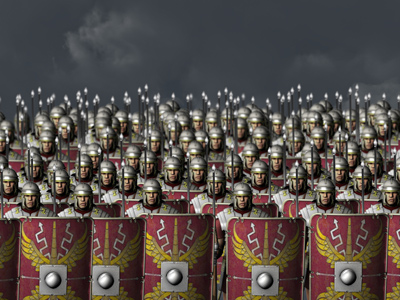
Mussolini had hopes of resurrecting the ancient Roman Empire.
World War One Aftermath: League Of Nations: 1930s - The Abyssinia Crisis Of 1935-1936
Explore how the League of Nations reacted to Mussolini’s invasion of Abyssinia and why this crisis badly damaged hopes for collective security in the 1930s.
1 .
What measures did the League of Nations take against Italy as a punishment for the invasion, and in the hope that it would accordingly fail?
No measures at all
Military sanctions
Economic sanctions with certain exceptions such as coal and iron ore
Unrestricted economic sanctions
In the middle of a worldwide economic recession it was difficult to expect member states to weaken their own economies through trade sanctions, or to embark on expensive and risky military action. However, the League now faced its second major test in the face of blatant bullying - the first had been the Japanese adventure in Manchuria
2 .
Italian warships and transports used an international waterway to get access to the Red Sea, and thence to threaten Abyssinia. What was the name of this waterway?
The Gulf of Aqaba
The Straits of Tiran
The River Nile
The Suez Canal
The League of Nations could - in theory - have denied Italy the use of this waterway. If this had happened, it is unlikely that the attack on Abyssinia could have been successful
3 .
Mussolini maintained that he was trying to re-establish an empire from the classical period. Which such empire was he attempting to revive?
The Carthaginian Empire
The Greek Empire
The Phoenician Empire
The Roman Empire
Mussolini was fond of classical images. He believed that something that had existed in the past could be resuscitated
4 .
Mussolini was anxious to avenge the defeat of an Italian army in 1896 at the hands of an Abyssinian force. Where did this defeat take place?
Adowa
Asmara
Addis Ababa
Djibouti
In 1896 Italy was a newly unified state, and the defeat was a major humiliation for her - the more so as Abyssinia was backward and lacked the weaponry that the Italians enjoyed
5 .
The Abyssinian leader took refuge in another state until his land had been freed during the Second World War. Where did he go?
France
Canada
Britain
Switzerland
A period in exile kept hopes of liberation alive. Africa provided several theatres in the Second World War, and by 1943 Italian forces had been driven out of Abyssinia. Exiles could now return and re-establish themselves in their homeland
6 .
Italy already had two colonies that bordered Abyssinia. Which one of the following African territories did Italy control?
Eritrea
The Sudan
Kenya
Uganda
This obvious advantage enabled Italy to assemble troops and supplies on the border, and to attack the victim from two sides
7 .
Which Abyssinian leader appealed personally in Geneva for assistance in the face of Italian aggression?
Haile Mariam
Haile Mengistu
Haile Selassie
Haile Gebreselassie
This dignified speech to the League's General assembly was greeted with derision by Italian journalists. The League was reminded by others of its obligations to deal effectively with naked aggression
8 .
Italy complained about Abyssinian shepherds making use of an Italian oasis. Mussolini used this border incursion as an excuse to invade. What was the name of the oasis?
Quattara
Wal Wal
Fashoda
Massawa
Alleged infringements of poorly defined borders were often used as excuses for declarations of war. Abyssinian pastoralists were used to crossing into neighbouring Italian land to use oases, to which they felt that they had a right of access
9 .
The status of Abyssinia was unusual and only shared by one other area in Africa. What was this factor?
It was colonised by two European states
It was an independent state, not a colony
It was ruled according to the terms of a League of Nations mandate
It had been independent at one time, but by 1935 it was a colony
Almost all of Africa had been colonised in one way or another during the "Scramble for Africa" during the Nineteenth Century
10 .
The foreign ministers of Britain and France concocted a plan to give two-thirds of Abyssinia to Italy, leaving a central core that included the capital and the railway to French Somaliland. They gave both their names to this device. What was it called?
The Sykes/Picot Agreement
The Daladier/Chamberlain Plan
The Hoare/Laval Plan
The Chamberlain/Briand Pact
Public opinion in both countries was outraged, as this plan seemed to reward unprovoked aggression.. Italy was not impressed either: they wanted all of Abyssinia



**Unlimited Quizzes Await You! 🚀**
Hey there, quiz champ! 🌟 You've already tackled today's free questions.
Ready for more?
Ready for more?
🔓 Unlock UNLIMITED Quizzes and challenge yourself every day. But that's
not all...
not all...
🔥 As a Subscriber you can join our thrilling "Daily Streak" against other
quizzers. Try to win a coveted spot on our Hall of Fame Page.
quizzers. Try to win a coveted spot on our Hall of Fame Page.
Don't miss out! Join us now and keep the fun rolling. 🎉
**Unlimited Quizzes Await You! 🚀**
Hey there, quiz champ! 🌟 You've already tackled today's free questions. Ready for more?
🔓 Unlock UNLIMITED Quizzes and challenge yourself every day. But that's not all...
🔥 As a Subscriber you can join our thrilling "Daily Streak" against other quizzers. Try to win a coveted spot on our Hall of Fame Page.
Don't miss out! Join us now and keep the fun rolling. 🎉




© Copyright 2016-2026 - Education Quizzes
Work Innovate Ltd - Design | Development |
Marketing
