




Ask the AI Tutor
Need help with USA: 1945-1975 - Civil Rights In The 1970s And The Civil Rights Of Other Groups? Ask our AI Tutor!
AI Tutor - Lucy
Connecting with Tutor...
Please wait while we establish connection
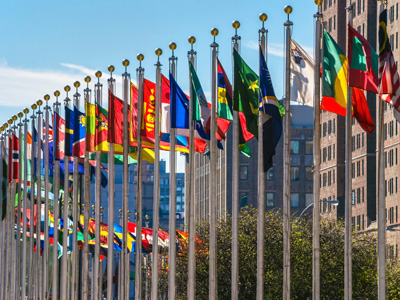
In 1977 Andrew Young became the first African American US representative at the United Nations.
USA: 1945-1975 - Civil Rights In The 1970s And The Civil Rights Of Other Groups
Revise civil rights in 1970s America, from remaining inequalities for Black Americans to the growing campaigns of women, Native Americans, Hispanic Americans and gay and lesbian groups.
1 .
Which book written by Alex Haley and published in 1976 was a bestseller, which encouraged many African Americans to research into their family background?
"Birthplace"
"Origins"
"Roots"
"Heritage"
The book was subtitled "The Saga of an American Family", and was made into a successful film and television series
2 .
The Voting Rights Act was extended in the 1970s to help Hispanics exercise their votes. What extra rights were they given?
The right to receive language assistance during the voting process
The right to vote even if not pre-registered
The right for a named proxy to vote on someone's behalf
The right to supervise the vote-counting procedure
Most Hispanics (except Puerto Ricans) had been missed out of the 1960s legislation
3 .
The organisation that represented Native American campaigners was the AIM. What do these letters stand for?
Autonomic Indian Movement
American Indian Movement
Autonomous Indian Movement
American Indian Militants
Native Americans were determined not to be left out, when they had seen what could be achieved by organised militancy
4 .
Hispanic Americans made their mark in the 1970s. From which Spanish-speaking state did most of them originally come?
Cuba
Puerto Rico
Mexico
Colombia
The Castro regime in Cuba swelled the influx of refugees from that source. On the other hand Mexico had a long border separating her from the USA: a poor country from a rich one. Puerto Rico also had strong ties with the US; Colombia likewise
5 .
In 1977 President Carter appointed Andrew Young, a prominent African American, to an important diplomatic post. What was the job?
US Ambassador to Germany
US Permanent Representative at the United Nations
US Ambassador to NATO
US Ambassador to Canada
This appointment was a sign that very able African Americans like Young could aspire to high office in the 1970s atmosphere, especially under a Democratic President
6 .
In 1972 the Minnesota Supreme Court passed a judgement that was welcomed by the emergent Gay Rights movement. Which issue did it concern?
Civil partnerships between same-sex partners
Adoption by same-sex couples
Legalising homosexual activity between consenting adults
Confirming active homosexuals in their employment
Issues like this one were normally dealt with on a state by state basis
7 .
Native Americans were also not slow to assert their rights. Which area in South Dakota did they occupy for 71 days in 1973?
Little Bighorn
Wounded Knee
Bison Creek
Bad Mountain
The grievance here was that the US government had reneged on the Treaty of Laramie, agreed at the end of the nineteenth century
8 .
In 1973 a landmark case in Texas, called Roe v. Wade, marked a further advance for women's rights. Which issue did it concern?
Equal pay for equal work
Abortion
Lesbian rights
The right to maternity leave
Texas was normally regarded as one of the more conservative states
9 .
In 1970 H. Carswell was rejected for high office following protests that he had a racist past and was opposed to women's rights. To which body was he seeking appointment?
The Supreme Court
The Minnesota Supreme Court
The New York District Court
The Harvard University Law Faculty
The case shows that protests by equality campaigners could have a successful outcome in the post-1960s environment
10 .
The growing women's movement in the US was frustrated by the failure of sufficient states to ratify the Equal Rights Amendment Act. Which leading US feminist frequently made the remark: "A woman needs a man like a fish needs a bicycle".
Betty Frieden
Betty Ford
Angela Davis
Gloria Steinem
All of these women were extremely assertive, but there were differences among them of social class, ethnicity and age



**Unlimited Quizzes Await You! 🚀**
Hey there, quiz champ! 🌟 You've already tackled today's free questions.
Ready for more?
Ready for more?
🔓 Unlock UNLIMITED Quizzes and challenge yourself every day. But that's
not all...
not all...
🔥 As a Subscriber you can join our thrilling "Daily Streak" against other
quizzers. Try to win a coveted spot on our Hall of Fame Page.
quizzers. Try to win a coveted spot on our Hall of Fame Page.
Don't miss out! Join us now and keep the fun rolling. 🎉
**Unlimited Quizzes Await You! 🚀**
Hey there, quiz champ! 🌟 You've already tackled today's free questions. Ready for more?
🔓 Unlock UNLIMITED Quizzes and challenge yourself every day. But that's not all...
🔥 As a Subscriber you can join our thrilling "Daily Streak" against other quizzers. Try to win a coveted spot on our Hall of Fame Page.
Don't miss out! Join us now and keep the fun rolling. 🎉




© Copyright 2016-2026 - Education Quizzes
Work Innovate Ltd - Design | Development |
Marketing
