




Ask the AI Tutor
Need help with Russia: 1914-1917 - War And Revolutions? Ask our AI Tutor!
AI Tutor - Lucy
Connecting with Tutor...
Please wait while we establish connection
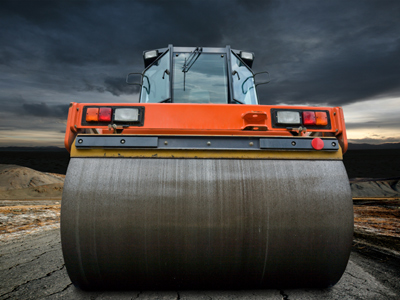
The Tsar's military was strong but slow, earning it the nickname 'Steamroller'.
Russia: 1914-1917 - War And Revolutions
Study how war, hardship, and political mistakes pushed Tsarist Russia towards the February and October Revolutions between 1914 and 1917.
1 .
What was the main reason why the Provisional Government took the fateful decision to carry on the war?
To remain loyal to her allies, Britain and France
Thoroughly to defeat Germany, and to wreak vengeance on her
To recover former Russian territory seized by Germany and Austria since 1914
To honour her responsibilities towards Serbia, for whom Russia claimed to have gone to war in the first place
The Russian government was well aware that it was far from winning the war, that it had gone to war in the beginning to support a fellow Slav state and that it had also acquired allies in Britain and France. The more perceptive members of the regime realised that the war was not proceeding well, and that it was deeply unpopular among the Russian people
2 .
Nicholas relinquished the throne on advice from liberal ministers, who feared a further revolution if the Tsar did not go. What was the precise decision that he made?
To abdicate in favour of his son, the Tsarevitch
To abdicate in favour of his kinsman Grand Duke Michael
To remain as Tsar, but to abandon most of his political and military authority
To abdicate in favour of no one, so ending the Romanov dynasty
Nicholas was in an unenviable situation. He felt bound to heed his ministers' advice, but was reluctant to break the oath that he had made at his coronation to keep autocratic power intact for his successors. He was conscious at the same time of the dire state of the Russian war effort and of the imminent danger of a communist revolution
3 .
What nickname was given to the Tsarist Russian military machine, suggesting slow speed combined with great weight?
Steamroller
Steam Engine
Road Roller
Locomotive
Russia's armed forces looked impressive on paper, but they were slow to assemble. Hence the German plan to attack France first, and then to strike east at the Tsarist Empire
4 .
To which of her advisors did the Empress Alexandra refer as "Our Friend"?
Rasputin
Miliutin
Miliukov
Grand Duke Alexander
When her husband the Tsar left St. Petersburg to take over overall command at the front, political power resided with the Tsarina. She did not lack for advice
5 .
Which Tsarist general did well with three successful offensives against Austria-Hungary in 1915, 1916 and 1917?
Brusilov
Grand Duke Nicholas
Samsonov
Kornilov
Russia was much more likely to succeed against Austria-Hungary than against Germany. Hence these spring offensives were directed against the southern flank of the Eastern Front
6 .
Why was the government which succeeded the Tsar, between February and October 1917, known as the "Provisional" Government?
It intended to hold elections soon to choose a constituent assembly
It expected to be overthrown by violent revolution
It was always determined to restore the monarchy as soon as the war was over
It had no plan at all: either to continue in power or to seek an alternative
The Provisional Government concentrated on winning the war, always hoping that something would turn up
7 .
Which former Social Revolutionary took over as leader of the Provisional Government until it was overthrown?
Alexander Kerensky
Maxim Litvinov
Nikolai Chicherin
Nikita Frunze
Leadership of the government became increasingly difficult as the war effort flagged
8 .
Where did Lenin seek refuge after the failure of the "July Days", a premature attempt by a coalition of radical groups to overthrow the Provisional Government against the Bolsheviks' better judgement?
Finland
Switzerland
Sweden
London
Lenin feared that the Provisional Government would be less lenient with him, now that he had been directly involved in a violent attempt to supplant them
9 .
Which noble was the first leader of the Provisional Government?
Alexander Kerensky
Prince Lvov
Tseretelli
Dimitri Yusupov
This was an unenviable task. The new government consisted of many difference parties and factions. It had decided to prosecute the war, and at the same time keep a wary look out for signs of further revolutions
10 .
Which warship from the Baltic fleet (and a veteran of the Russo-Japanese War) fired at the Winter Palace where the Provisional Government were in permanent emergency session, thus initiating the Bolshevik Revolution of October 1917?
Potemkin
Aurora
Ordzonokidze
Alexander Pushkin
The Baltic fleet was based at Kronstadt, a short distance downstream in the Gulf of Finland from St. Petersburg. Thus it would be easy for ships from this fleet to intervene on one side or the other in the event of a further revolutionary outbreak



**Unlimited Quizzes Await You! 🚀**
Hey there, quiz champ! 🌟 You've already tackled today's free questions.
Ready for more?
Ready for more?
🔓 Unlock UNLIMITED Quizzes and challenge yourself every day. But that's
not all...
not all...
🔥 As a Subscriber you can join our thrilling "Daily Streak" against other
quizzers. Try to win a coveted spot on our Hall of Fame Page.
quizzers. Try to win a coveted spot on our Hall of Fame Page.
Don't miss out! Join us now and keep the fun rolling. 🎉
**Unlimited Quizzes Await You! 🚀**
Hey there, quiz champ! 🌟 You've already tackled today's free questions. Ready for more?
🔓 Unlock UNLIMITED Quizzes and challenge yourself every day. But that's not all...
🔥 As a Subscriber you can join our thrilling "Daily Streak" against other quizzers. Try to win a coveted spot on our Hall of Fame Page.
Don't miss out! Join us now and keep the fun rolling. 🎉




© Copyright 2016-2026 - Education Quizzes
Work Innovate Ltd - Design | Development |
Marketing
