




Ask the AI Tutor
Need help with Britain: Kenyan Independence - How Britain Dealt With The Issue? Ask our AI Tutor!
AI Tutor - Lucy
Connecting with Tutor...
Please wait while we establish connection
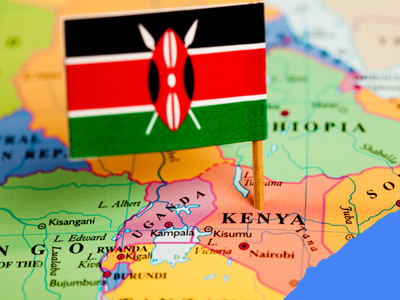
Kenya gained its independence from the UK in 1963.
Britain: Kenyan Independence - How Britain Dealt With The Issue
This GCSE History quiz looks at how Britain managed Kenyan independence, from rebellion and emergency rule to negotiations, constitutional change and final membership of the Commonwealth.
1 .
30,000 white settlers were concentrated in an upland area north west of Kenya's capital, Nairobi. What name was given to this area of fertile farmland?
The Aberdares
Happy Valley
The White Highlands
The Rift Valley
Large and successful farms were set up: some arable and some dedicated to raising cattle. Unfortunately for the security of white settlers many local African tribespeople regarded this land as theirs
2 .
Which tribe felt particularly strongly that they had a right to white settler land in this region?
Luo
Kalenjin
Kikuyu
Meru
The land issue became a serious bone of contention by the 1950's
3 .
Which African figure was regarded by the British as the chief culprit in stirring up unrest over the land question?
Tom Mboya
Jomo Kenyatta
Oginga Odinga
Daniel Arap Moi
The authorities were anxious to arrest a principal figure in the hope that unrest would then die down
4 .
What name was given to the African movement which gripped the white-settled area of the colony between 1952 and 1956?
Mau Mau
The African National Congress
Freedom Fighters' League
The Kenyan Land League
The emergency lasted for four years, and many thousands of African suspects were arrested. Some were tortured, even mutilated
5 .
Some whites favoured compromise with African nationalist demands. One such group was led by Sir Michael Blundell. What was his party's name?
Kenya's Future
Kenya Forward
The New Kenya Group
Kenya Coalition
Most white settlers opposed concessions to the African majority, but Blundell believed that compromise was possible
6 .
A powerful African party emerged in Kenya after the constitutional conference in London in 1960. This party eventually took power in Kenya on the eve of independence. What was it called?
The Kenya African People's Union
The Kenya African National Union
The Kenyan People's Union
The Kenyan African Independence Union
After 1960 Kenyan independence under African rule seemed inevitable
7 .
There was however an opposition group - an alternative African nationalist party, deriving its support from a different combination of tribal groups. What was it called?
The Kenya African Democratic Union
The Kenya Democratic Union
The Kenya People's Democratic Union
The Kenya National Liberation Front
After independence this party was soon sidelined
8 .
Which Kenyan trade union leader, and author of "Facing Mount Kenya", was assassinated in 1969?
Ernest Mwatele
Silas Watube
Tom Mboya
Williams Matai
Kenyan politics was robust - reinforced by strong tribal divisions
9 .
When did Kenya receive its independence as a member of the Commonwealth?
December 1962
December 1961
December 1963
December 1964
Initially Kenya remained a monarchy with the British monarch as Head of State
10 .
Eventually Kenya became a republic, recognising Britain's Queen only as Head of the Commonwealth, of which Kenya continued to be a member. In which year did this happen?
1963
1965
1964
1966
Kenya remained a close ally of Britain's



**Unlimited Quizzes Await You! 🚀**
Hey there, quiz champ! 🌟 You've already tackled today's free questions.
Ready for more?
Ready for more?
🔓 Unlock UNLIMITED Quizzes and challenge yourself every day. But that's
not all...
not all...
🔥 As a Subscriber you can join our thrilling "Daily Streak" against other
quizzers. Try to win a coveted spot on our Hall of Fame Page.
quizzers. Try to win a coveted spot on our Hall of Fame Page.
Don't miss out! Join us now and keep the fun rolling. 🎉
**Unlimited Quizzes Await You! 🚀**
Hey there, quiz champ! 🌟 You've already tackled today's free questions. Ready for more?
🔓 Unlock UNLIMITED Quizzes and challenge yourself every day. But that's not all...
🔥 As a Subscriber you can join our thrilling "Daily Streak" against other quizzers. Try to win a coveted spot on our Hall of Fame Page.
Don't miss out! Join us now and keep the fun rolling. 🎉




© Copyright 2016-2026 - Education Quizzes
Work Innovate Ltd - Design | Development |
Marketing
