
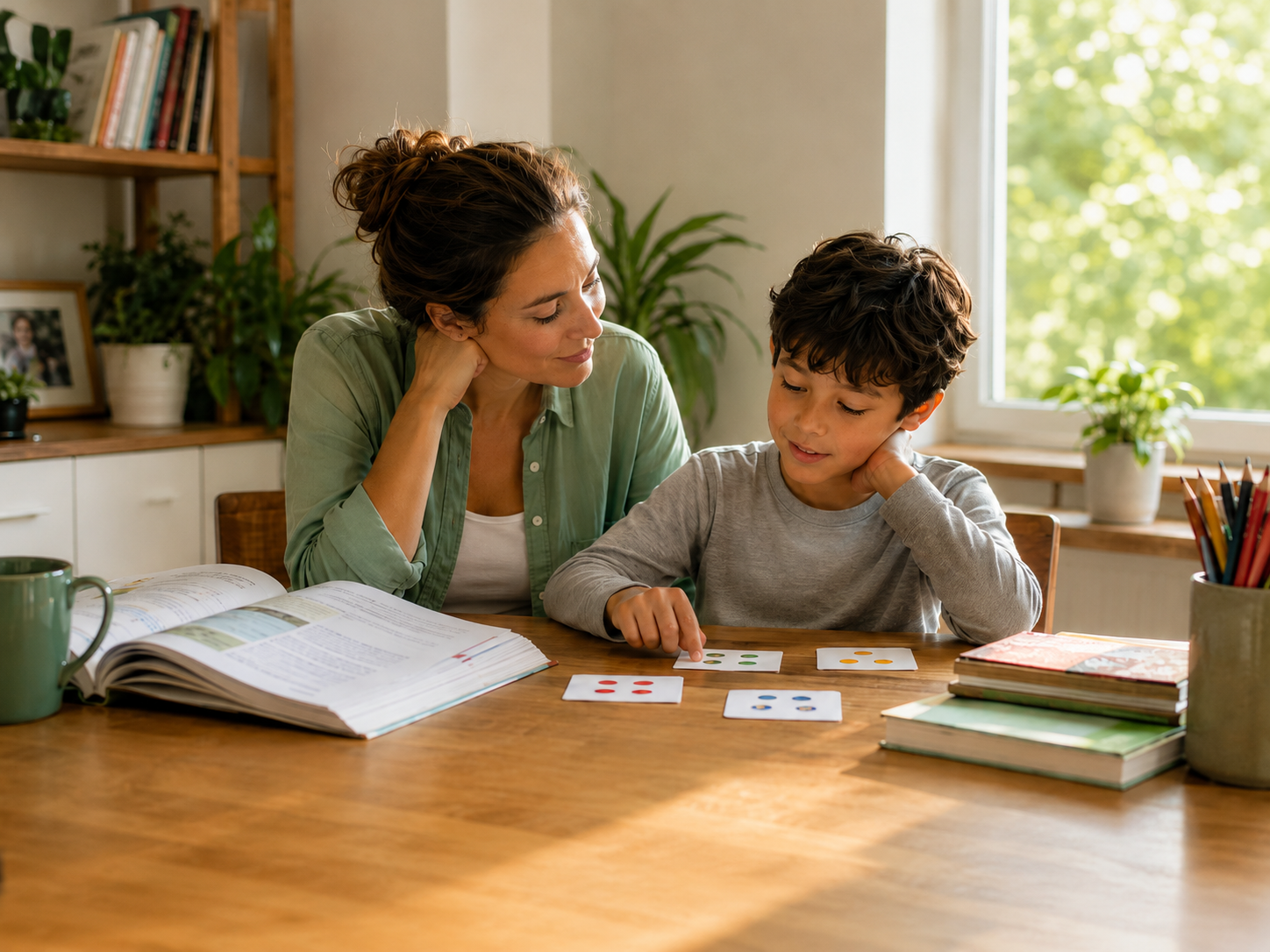
The most important part of our job is not making children learn – it is making them want to learn.
That belief sits at the heart of Education Quizzes.
For years, we have built quizzes to help children practise English, maths, science and many other subjects from KS1 to GCSE. But the real purpose has never been simply to put more questions in front of children. It has been to change the mood around learning.
When a child is faced with a worksheet, a textbook or a long revision session, the task can feel heavy before it has even begun. A quiz feels different. It offers a question, a choice, a moment of thought, and then instant feedback. It gives the child a small step rather than a mountain.
A 10-question quiz is as digestible as a bar of chocolate. A textbook can feel more like a main course meal – complete with all the vegetables they would rather leave on the plate!
When children want to learn, the energy changes. They ask questions. They try again. They take pride in improvement. They begin to see learning not as something being done to them, but as something they can own for themselves.
Visible Progress = Powerful Encouragement
One of the best ways to make children want to learn is to let them see that they are getting somewhere.
That is why our Traffic Lights system matters. Green shows success, amber shows they are getting there, and red shows where more practice is needed.
There is no long wait, no complicated report and no mystery. Children can see instantly how they are doing.
That small moment of feedback is powerful. A green light brings satisfaction. Amber says, “nearly there.” Red gives a clear next step.
Progress becomes visible – and visible progress makes children want to continue.
Confidence Is Built One Small Success at a Time
Confidence matters because children who believe they can improve are far more likely to keep trying.
But confidence does not come from simply being told, “You can do it.” It comes from experience. Every time a child answers a quiz question correctly their confidence grows. Likewise, when they turn a traffic light from red to amber or amber to green.
Quizzes work well because they break learning into manageable moments: try, learn, improve, try again.
Over time, those small moments can change a child’s thinking from “I can’t do this” to “I’m getting better at this and eventually “I’m good at this”.
Wanting to Learn Should Not be an Afterthought
Children need guidance, structure and sometimes firm boundaries. But there is a world of difference between guiding a child and dragging a child.
When learning becomes a constant battle, the subject itself can become the enemy. Maths becomes the thing that causes arguments. English becomes the thing that brings sighs. Homework becomes the nightly struggle everyone dreads. Children may still learn something in that atmosphere, but they may also learn a second lesson: that education is unpleasant. Isn’t it our obligation to ensure that doesn’t happen?
That is why wanting to learn is not a soft extra. It is one of the strongest forces in education. A motivated child concentrates for longer. A curious child asks better questions. A confident child tries again after getting something wrong.
Children also need reasons to care that feel close and immediate. “You’ll need this one day” may be true, but it is often too distant to inspire them now. They may be more motivated by getting a question right, beating their last score, earning praise, understanding something difficult, or turning a Traffic Light from red to amber or amber to green.
This is where quizzes can change the mood. A quiz feels less like a lecture and more like a challenge. It gives children something to do, not just something to receive. Each question is a small step: try, learn, improve, try again.
As Artificial Intelligence changes the world, this becomes even more important. Children will still need curiosity, judgment, confidence and the ability to ask good questions. Those qualities are not developed by force alone.
So perhaps the better question is not, “How do we make children learn?”
It is, “How do we make children want to learn?”